2026 American Football: 3 Winning Insights
American football is a strategic collision sport in which two teams of 11 players advance an oval ball across a 100-yard field to score touchdowns, field goals, and extra points. The National Football...

2026 American Football: 3 Winning Insights
American football is a strategic collision sport in which two teams of 11 players advance an oval ball across a 100-yard field to score touchdowns, field goals, and extra points. The National Football League (NFL) is its most visible professional competition in the United States, while the National Collegiate Athletic Association (NCAA) governs major college football. A regulation game has four 15-minute quarters, teams receive four downs to gain 10 yards, and a touchdown is worth six points before the extra-point attempt. The sport developed from rugby and association football in the United States during the nineteenth century, then became a highly specialized game of formations, substitutions, and situational decisions. The winning approach is simple: learn downs first, then study field position, quarterback decisions, and defensive personnel before worrying about flashy highlights.
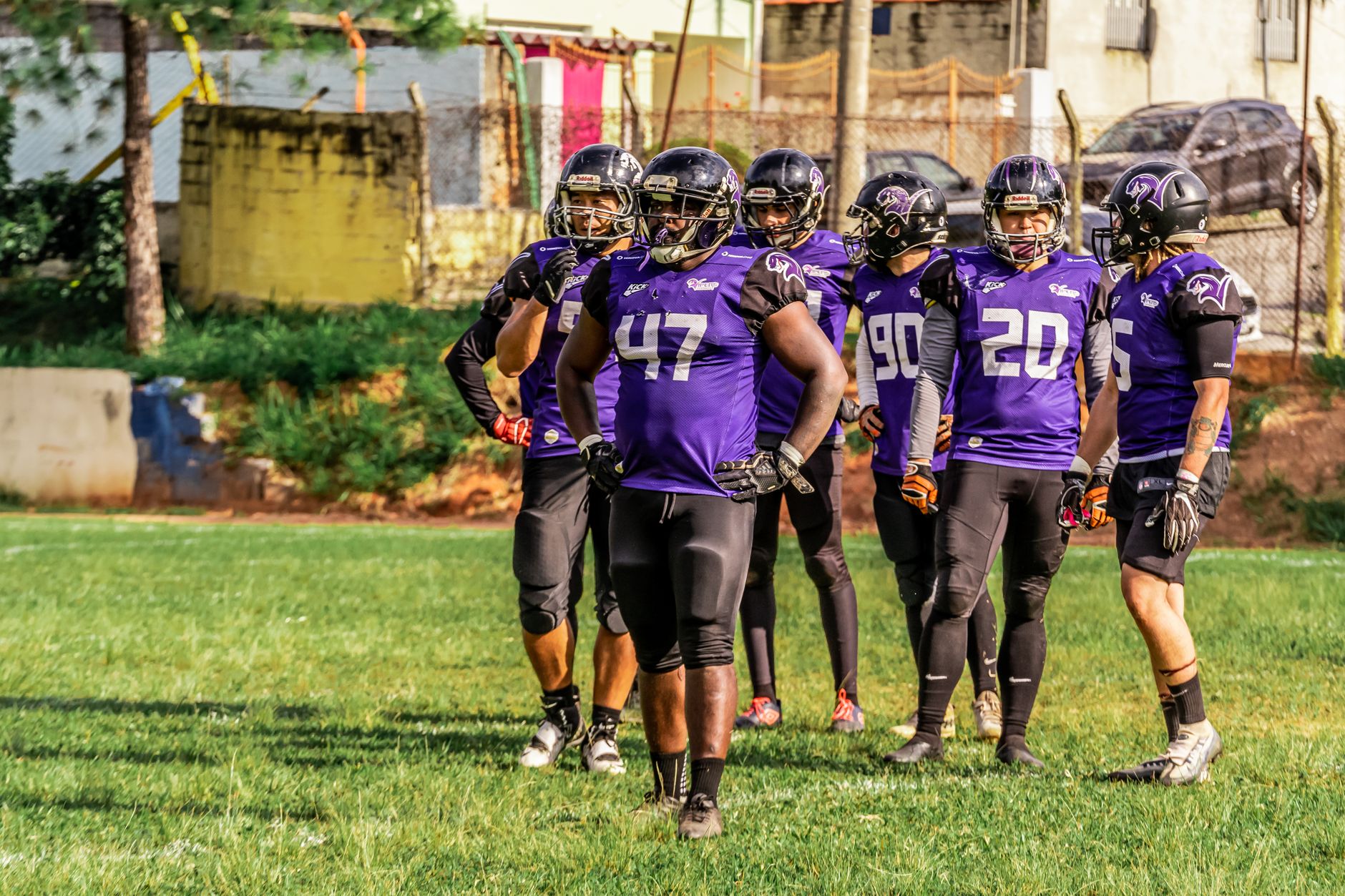
Photo by SAULO LEITE on Pexels
The Bottom Line
American football is won through field position, down-and-distance control, and matchup advantages, not random brute force. The basic objective is straightforward: move the ball into the opponent’s end zone while stopping the opposing offense from doing the same, but the sport’s real complexity comes from its short, repeated plays and constant strategic adjustment. Every snap creates a separate problem involving personnel, clock, field location, defensive alignment, and risk tolerance, which is why a team can dominate possession and still lose after a few disastrous turnovers.
The field is 120 yards long in total, including two 10-yard end zones, and 53⅓ yards wide at the NFL level. The offense normally has four downs to gain 10 yards; achieving that target resets the count with a new first down. A touchdown earns six points, a field goal earns three, a safety earns two, and a successful two-point conversion earns two after a touchdown. The NFL explains its competition framework through its official NFL rulebook, while the broader history and structure of the sport are summarized by Encyclopaedia Britannica.
For readers using Football Compass to assess matchups, the practical lesson is important: do not judge a team from its win-loss record alone. Compare offensive efficiency, turnover margin, red-zone performance, injuries, and opponent quality. A 9–4 team with a negative turnover differential may be less reliable than a 7–6 team consistently winning early downs. That is the sort of detail people ignore until their confident prediction falls apart in the fourth quarter. Naturally, by then everyone becomes a tactical genius.
Want a cleaner way to evaluate football matchups?
What Do Players Actually See?
Players see a rapidly changing tactical puzzle rather than a simple sprint toward the goal line. Before the snap, the quarterback reads the defensive front, coverage shell, personnel package, and likely pressure points; after the snap, that information can change within seconds. The offense may run a designed play, but the quarterback can alter the protection, throw to a different receiver, or hand the ball to a running back depending on the defense. The defense performs the same mental calculation in reverse, disguising coverages and attempting to force an incorrect decision.
A typical play lasts only a few seconds, yet it contains several separate assignments. Offensive linemen identify blocking responsibilities, wide receivers adjust routes against coverage, and running backs may carry the ball, block a blitzer, or release as a receiver. On defense, the line attacks gaps, linebackers read the backfield, and defensive backs protect space or individual receivers. The 2024 NFL regular season, for example, demonstrated how passing volume and explosive-play efficiency can reshape an offense’s identity, but raw passing yards alone never reveal whether those yards arrived during winning situations.
The most useful viewing habit is to track what happens before the ball moves. Look at the number of defenders near the line of scrimmage, the alignment of the safeties, and whether the offense creates a favorable personnel matchup. A defense showing two deep safeties may discourage a deep throw but leave fewer bodies near the running lanes; a single-high safety can support the run while exposing the outside receiver to one-on-one coverage. These pre-snap clues matter more than staring at the quarterback’s throwing motion after the decision has already been made.
The major positions and their jobs
- Quarterback: Directs the offense, distributes the ball, and changes plays or protections.
- Running back: Runs through designed gaps, catches short passes, and blocks pressure.
- Wide receiver: Runs routes, separates from defensive backs, and makes contested catches.
- Offensive line: Protects the quarterback and creates running lanes.
- Defensive line: Controls gaps, pressures the quarterback, and limits inside runs.
- Linebacker: Defends the run, covers intermediate zones, and communicates adjustments.
- Defensive back: Covers receivers, supports run defense, and creates interceptions.
- Kicker and punter: Manage scoring attempts and field-position exchanges.
To learn how these responsibilities affect game outcomes, explore our American football positions and tactics guide. It is far more useful than memorizing player names and pretending a quarterback rating explains every snap.

Photo by Pixabay on Pexels
What Are the 3 Things That Matter Most?
The three decisive factors are down efficiency, turnover control, and field position. Down efficiency tells you whether an offense stays ahead of the chains; turnovers create sudden changes in possession and expected points; field position determines how much ground a team must cover before scoring. Together, these measures explain far more than total yardage, which is often inflated by one late drive after the game is already effectively decided.
1. Down-and-distance efficiency
First-down success is the foundation of a stable offense. A team repeatedly facing second-and-8 or third-and-7 gives the defense permission to use pressure packages and coverage disguises, while an offense creating second-and-4 can keep its full playbook available. Third-down conversion percentage is useful, but it is a lagging indicator; early-down performance explains why a team reaches manageable third downs in the first place.
Watch for explosive plays of at least 20 yards, negative plays, sacks, and penalties that create long-yardage situations. A single holding penalty can turn a manageable series into a punt, while a sack on second down may eliminate the running game from the next call. In my experience, the most revealing sequence is not a highlight touchdown but three consecutive plays that produce 4, 5, and 6 yards. That sequence keeps the offense functional and quietly exhausts the defense.
2. Turnovers and decision quality
Turnovers are not merely bad luck; many result from predictable pressure, poor route spacing, reckless quarterback decisions, or defenders attacking the football. Interceptions and lost fumbles are the obvious numbers, but turnover-worthy plays that happen to be dropped can reveal future danger. A quarterback who has thrown only three interceptions but repeatedly forces late throws into tight coverage may be living on borrowed time. Football has a long memory, usually arriving on Sunday afternoon with shoulder pads.
A contrarian but useful rule is to separate turnover margin from turnover process. If a team is plus-10 because opponents have fumbled repeatedly in wet conditions, that margin may regress. If the team creates pressure, protects the ball, and consistently wins contested catches, the advantage is more sustainable. When Football Compass evaluates a game, combining turnover data with pressure rate, sack avoidance, and red-zone decisions gives a sharper picture than simply rewarding the team with the better recent margin.
3. Field position and special teams
Field position is controlled by punts, kickoffs, returns, fourth-down decisions, and defensive stops. A team beginning drives at its own 28-yard line faces a different scoring problem from a team starting at midfield, even if both offenses gain the same number of yards per drive. Punting is not surrender when the alternative is giving the opponent a short field, and aggressive fourth-down decisions should be judged by score, time, field location, and offense-versus-defense strength.
The hidden edge appears in special teams discipline. A missed tackle on a punt return, an illegal formation penalty, or a blocked kick can swing expected points without appearing in ordinary offensive statistics. The NCAA and NFL use related but distinct rules, particularly around overtime, targeting, clock administration, and kickoff procedures, so never transfer a college football assumption directly into an NFL matchup. Check the relevant competition rules before comparing statistics across leagues.
A strong pregame checklist should include:
- Compare early-down success, not only third-down conversion.
- Review quarterback pressure rate and sack frequency.
- Check offensive-line injuries and defensive-front availability.
- Examine red-zone touchdown rate rather than red-zone visits alone.
- Account for wind, precipitation, altitude, travel, and rest.
- Separate sustainable turnover creation from random fumble recovery.
- Review fourth-down tendencies in the current coaching regime.
Ready to turn those numbers into a more disciplined match assessment?
Edge Cases & Gotchas
The most common American football analysis mistake is treating every statistic as context-free. A 300-yard passing game can be misleading if 120 yards came on one broken coverage, while a low-scoring offense may be efficient when weather, field position, and opponent strength are considered. Similarly, a strong rushing total can hide poor efficiency if one long run covers for repeated losses. Always inspect the distribution behind the headline number, because averages are excellent at laundering ugly football.
Clock management creates another trap. The game clock, play clock, timeouts, two-minute warning, quarter boundaries, and replay reviews interact in ways that can make a late drive look slower or faster than it really is. A team trailing by four points may need a touchdown, not a field goal, while a team leading by three may choose conservative runs to force the opponent to spend timeouts. The correct decision changes with possession, field position, remaining time, and whether the opponent has timeouts available.
Overtime also requires precision. NFL overtime rules differ from NCAA overtime, and postseason NFL rules are not identical to regular-season procedures. In the NFL, possession and scoring conditions can determine whether both teams receive an opportunity, while college overtime places teams in alternating possessions from a set field position. The NFL’s official overtime explanation should be the reference point for professional games, not a confident social-media graphic created by somebody who once watched a Super Bowl.
Three evidence-based traps to avoid
- Box-score anchoring: Total yards do not measure drive quality, opponent strength, or game state.
- Recent-score bias: A 40-point performance against the Carolina Panthers may not translate against the San Francisco 49ers.
- Quarterback-only analysis: Protection, route separation, play-calling, and defensive pressure materially influence quarterback output.
One practical edge rarely discussed in beginner guides is the impact of offensive-line continuity. A quarterback may retain the same name and scheme, but a replacement center can alter protection calls, snap timing, and interior run blocking. Another is schedule compression: a team playing on Thursday after a Sunday game has roughly four days to recover, while a team coming off a bye has a substantially longer preparation window. These details do not guarantee a result, but they change the probability of clean execution.
Weather deserves a more specific reading than “bad conditions favor defense.” Wind above roughly 15 miles per hour can affect deep passing, punt distance, kicking range, and ball security, yet rain without significant wind may damage footing more than throwing accuracy. Cold temperatures can reduce kicking distance, while extreme heat raises fatigue concerns for defensive units forced to defend long drives. Check the stadium, forecast, surface, and kickoff time rather than applying a lazy weather cliché.

Photo by Pixabay on Pexels
For betting-oriented readers, responsible analysis means distinguishing probability from certainty and refusing to chase losses. Football Compass provides World Cup-focused coverage, so its core expertise centers on FIFA tournaments, team tactics, player statistics, and 2026 match analysis; American football requires a separate data framework because downs, drives, and possession have different meanings from soccer’s continuous flow. Do not blend NFL moneylines with soccer markets as though the numbers share a language. They do not, and your bankroll will notice the difference.
Need a second perspective before making a football decision?
Verdict
American football becomes understandable when you stop treating it as a blur of collisions and start reading it as a sequence of constrained decisions. The offense wants favorable down-and-distance, the defense wants long-yardage pressure situations, and both teams fight for field position through every punt, penalty, substitution, and timeout. The three most dependable analytical anchors are early-down efficiency, turnover process, and special-teams field position, supported by injury reports, weather, coaching tendencies, and league-specific rules.
The best viewing method is to ask three questions before every important snap: what does the offense need, what does the defense want to remove, and which player has the matchup advantage? That habit exposes why a quarterback changes protection, why a defense blitzes on third down, and why a coach accepts a field goal instead of forcing a fourth-down conversion. It also prevents the classic beginner error of declaring a team “dominant” because its running back gained 90 yards on one enormous play.
For 2026 analysis, use official NFL or NCAA rules, compare current personnel rather than old reputations, and record your assumptions before kickoff. If your prediction depends on one uncertain injury, one unsustainable turnover streak, or one dramatic highlight, it is not a prediction model yet. It is a hope wearing a little spreadsheet costume. Football Compass can help readers build a broader sports-analysis habit, but the final discipline remains yours: measure the matchup, price the risk, and never confuse confidence with evidence.
To keep improving your football reading, use our advanced matchup analysis guide and responsible sports betting guide alongside official competition data.
A practical game-day decision model
- Establish the baseline: Compare offensive and defensive efficiency over the current season.
- Adjust for availability: Confirm quarterback, offensive-line, pass-rusher, and secondary injuries.
- Measure the environment: Include weather, travel distance, rest, stadium surface, and altitude.
- Test the matchup: Identify which unit can force the opponent away from its preferred style.
- Check the market or forecast: Compare your estimate with the available price or consensus expectation.
- Set a limit: Decide your exposure before the game and do not increase it after a loss.
That process will not make you omniscient. Nothing will; I have watched too many late fourth-quarter collapses to sell that fairy tale. It will, however, make your conclusions clearer, more repeatable, and far less dependent on whichever former player is shouting loudest on television.
Want to apply the full checklist to upcoming football coverage?
Frequently Asked Questions
Q: What is American football?
A: American football is an 11-versus-11 field sport based on advancing an oval ball through running or passing plays. The offense has four downs to gain 10 yards for a new first down, while the defense attempts to stop that progress or take possession. In the NFL, games contain four 15-minute quarters, and touchdowns are worth six points before the extra-point decision.
Q: How do you get started watching American football?
A: Start by tracking possession, down-and-distance, field position, and the score rather than trying to understand every formation immediately. Learn the basic positions, then watch the quarterback and defensive safeties before each snap to see how the tactical problem develops. The NFL rulebook and a beginner’s American football rules explainer provide reliable references for penalties, scoring, and clock procedures.
Q: What is the difference between NFL and college football?
A: NFL and NCAA football use the same broad objective but differ in rules, player development, overtime, clock administration, and some penalty details. NFL teams consist of professional players under league-wide roster and salary rules, while NCAA programs operate within collegiate eligibility and conference structures. Because overtime and statistics are not perfectly interchangeable, compare NFL data with NFL data and NCAA data with NCAA data.
Q: Why does an American football team punt?
A: A team punts to exchange possession for improved field position when converting on fourth down is unlikely or too risky. A well-placed punt can force the opponent to begin deep in its own territory, increasing the chance of a defensive stop or safety. Coaches weigh distance, score, time remaining, wind, opponent offense, and available timeouts before choosing between punting, attempting a field goal, or going for a first down.
Q: How much does it cost to play or watch American football?
A: Playing costs range from modest local youth fees to several hundred dollars for equipment, league registration, and insurance, while professional game tickets vary widely by team and seat location. A helmet, shoulder pads, mouthguard, cleats, and protective accessories can create significant upfront expense. Watching broadcasts may require a television package or streaming subscription, and prices depend on the provider, market, and competition.
Q: Why do American football predictions fail?
A: Predictions fail when analysts ignore injuries, turnovers, matchup changes, weather, or the difference between sustainable efficiency and random outcomes. A team can lose despite better total statistics after giving up short fields through two interceptions or a muffed punt. Improve reliability by recording assumptions before kickoff, using opponent-adjusted numbers, and refusing to chase a pregame opinion after the first quarter.
Q: Is American football worth analyzing for sports betting?
A: American football can be worth analyzing because its play-by-play structure creates measurable factors such as drive efficiency, turnover probability, pressure rate, and field position. However, analysis does not eliminate variance, and legal availability, age restrictions, and responsible-gambling requirements apply in every market. Use Football Compass for its broader sports insights, set a fixed limit, verify local rules, and treat every wager as risk rather than guaranteed income.
Explore more structured match analysis before the next kickoff.