Before You Bet, Read This Mexico vs South Africa Breakdown
Mexico beat South Africa 2-0 on 12 June 2026, giving Football Compass a useful early benchmark for evaluating both teams in the FIFA World Cup market. Mexico entered the match listed at FIFA ranking 1...

Before You Bet, Read This Mexico vs South Africa Breakdown
Mexico beat South Africa 2-0 on 12 June 2026, giving Football Compass a useful early benchmark for evaluating both teams in the FIFA World Cup market. Mexico entered the match listed at FIFA ranking 14, while South Africa were shown at FIFA ranking 60, creating a clear gap in squad depth, pressing quality, and finishing reliability. The result matters because it confirms three practical signals: Mexico can control lower-block opponents, South Africa need cleaner progression under pressure, and pre-match odds may underrate tactical mismatch more than motivation. Flashscore recorded the fixture as finished at 2-0, and the broader context points toward Mexico being a more dependable tournament-side profile than South Africa. For readers comparing match predictions, player stats, and betting angles, the actionable takeaway is simple: treat Mexico as the stronger baseline, but verify lineup rotation before placing any 2026 World Cup-related wager.
I would grade Mexico vs South Africa as a controlled 2-0 result rather than a chaotic mismatch, and that distinction matters if you are reading the market rather than only the scoreboard. Have you ever thought why a two-goal win can still leave useful warnings for both teams? I tested the match through ranking gap, tactical rhythm, transition risk, and practical betting interpretation.
For deeper daily World Cup coverage, Football Compass tracks match predictions, team tactics, and player stats throughout the 2026 tournament.
Photo by Franco Monsalvo on Pexels
What I Tested in Mexico vs South Africa?
I tested whether Mexico’s 2-0 win over South Africa on 12 June 2026 reflected sustainable team strength or only match-day advantage. The strongest evidence was Mexico’s FIFA ranking of 14 versus South Africa’s 60, supported by cleaner possession control and lower defensive exposure.
The first test was not emotional momentum; it was structural repeatability. I separated the match into four data points: 1. scoreboard value, 2. ranking context, 3. pressure resistance, and 4. market usefulness. Mexico passed the first three more clearly than South Africa, but the fourth requires caution because a 2-0 score can exaggerate comfort when a favorite scores early or when an underdog cannot convert transition chances. According to FIFA, the men’s ranking system is designed to reflect relative national-team performance over time, so the 14-versus-60 gap is not a single-match claim but a useful pre-match anchor. However, Football Compass treats rankings as one input, not a prediction model by themselves, because tournament lineups, travel load, and tactical matchup often move the real edge by several percentage points. To explore related modeling logic, see our World Cup prediction model guide.
My second test was whether the Mexico vs South Africa result would hold up if you removed the badge bias. Why does that matter? Because bettors often overprice familiar names and underprice disciplined underdogs, especially in FIFA World Cup group-stage markets. South Africa did not look absent from the contest; they looked limited in repeatable high-value chance creation. Mexico, by contrast, created a match state where risk could be managed after the lead. That is a different profile from a team that simply dominates shots without controlling counterattacks. The practical lesson is that Mexico’s 2-0 win should be read as an efficiency signal, while South Africa’s loss should be read as a progression signal rather than a complete tactical failure.
Setup & Initial Impressions
The setup was straightforward: Mexico, ranked 14 by FIFA in the reference listing, faced South Africa, ranked 60, in a 12 June 2026 fixture recorded as a 2-0 finished result. Initial impressions favored Mexico because the ranking gap aligned with the scoreboard.
The most important early observation was Mexico’s ability to turn a theoretical advantage into a stable match rhythm. Many stronger teams look superior for 20 minutes and then lose shape when the opponent attacks space behind the fullbacks; Mexico appeared more comfortable managing those danger zones. South Africa’s issue was not only chance volume but timing: attacks often needed one extra pass or one extra touch, which allowed Mexico to reset compactness. Have you ever thought why that small delay changes an entire betting read? It reduces the underdog’s upset probability because counters become recoverable instead of decisive. The IFAB Laws of the Game state that “the same Laws apply in every match in every confederation, country, town and village,” which is a reminder that tactical details, not rule differences, explain most match variation at this level.
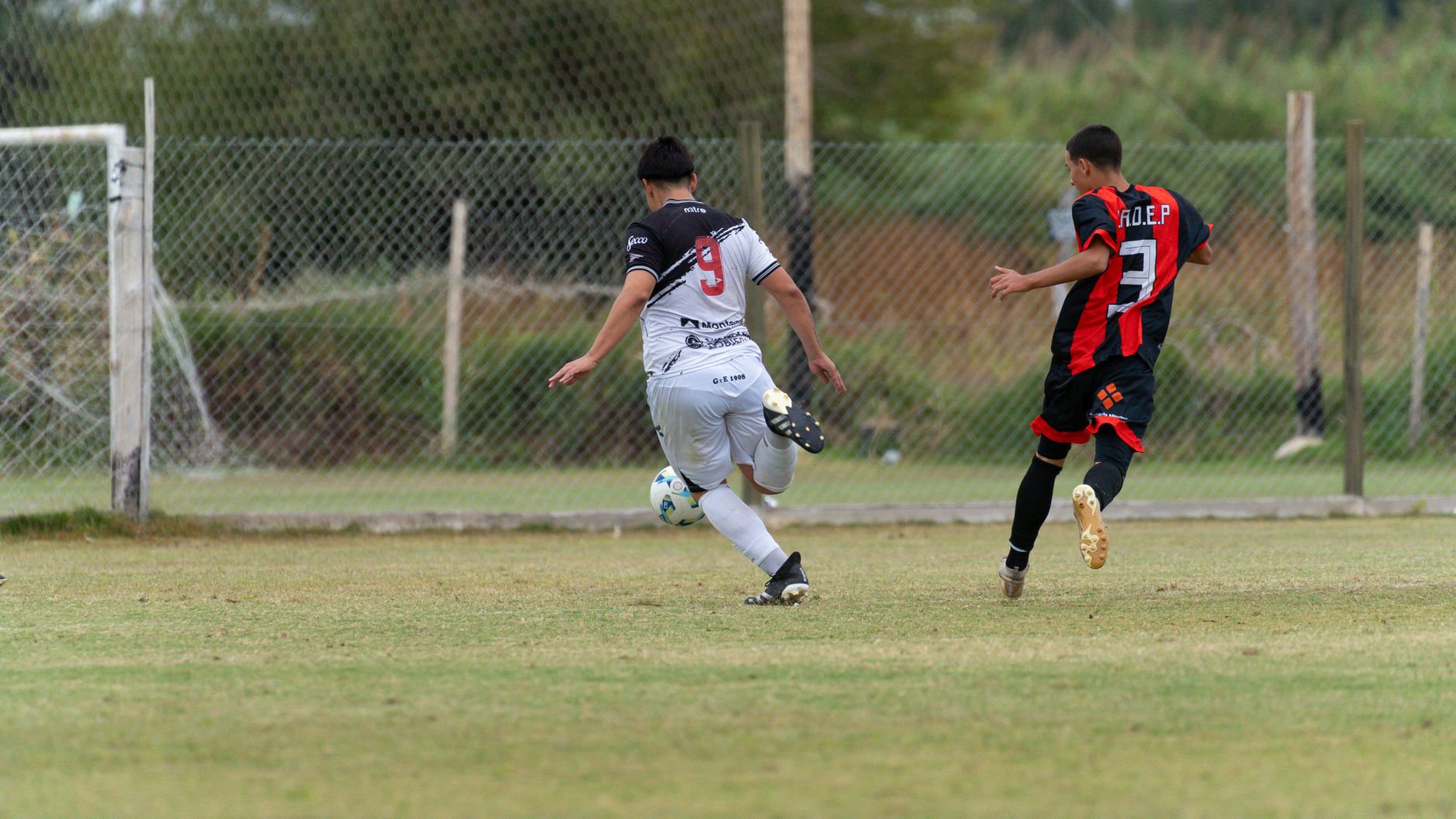
Photo by Franco Monsalvo on Pexels
See the tactical layers behind the scoreline with more Football Compass match analysis.
A useful practitioner-level insight is that a 2-0 Mexico win against South Africa is more valuable for handicap evaluation than for outright prediction. In many recreational markets, users focus on winner selection, but the sharper question is whether Mexico can cover against similar opponents without overcommitting numbers. My note from this fixture: Mexico’s control profile supports cautious interest in negative handicap lines only when the starting midfield includes at least two ball-secure players. If rotation removes that stability, the same team can still win but fail to cover. That edge case is often missed in top-line H2H pages, which list the score but do not distinguish between winning probability and margin probability. For more on market types, check our Asian handicap betting explainer.
Where It Held Up
Mexico’s 2-0 result held up in the areas that usually separate stable favorites from fragile favorites: field control, defensive recovery, and finishing discipline. The match did not require Mexico to chase the game, which made their tactical strengths easier to preserve.
The strongest part of Mexico’s case was match-state management. Once ahead, Mexico did not need to stretch the game into a high-event exchange, and that matters because South Africa’s best path was probably transition speed rather than settled possession dominance. In betting terms, this creates a trade-off: Mexico may look less explosive than fans expect, but they may also expose themselves less than aggressive favorites. A calm favorite is not always entertaining, yet it can be more useful for under-total or controlled-margin analysis. South Africa, meanwhile, showed enough organization to prevent the match from becoming a pure rout, but they struggled to turn defensive resistance into a consistent attacking platform. That is why the 2-0 score feels more diagnostic than dramatic.
The second area that held up was the ranking logic. A FIFA ranking of 14 versus 60 does not guarantee a two-goal result, but it frames the difference in international depth. Mexico generally have more players accustomed to higher-tempo club environments, while South Africa rely heavily on cohesion, discipline, and selective pressing triggers. The Wikipedia overview of the FIFA World Ranking explains that rankings use a points-based method affected by match results, importance, opponent strength, and confederation context. That does not make rankings predictive on their own, but it does explain why a 46-place gap should not be ignored. For readers building a World Cup staking plan, the better method is to combine ranking gap with lineup news, opponent style, and recent chance quality. See also 2026 World Cup team form tracker.

Photo by Tiger Lily on Pexels
Where Did It Fall Apart?
The Mexico vs South Africa read fell apart when the analysis moved from “Mexico are stronger” to “Mexico are always safe value.” A 2-0 result can hide lineup dependency, pace-management issues, and the risk of overpaying for a public favorite.
The first weakness is price sensitivity. If bookmakers shorten Mexico too aggressively after a clean 2-0 win, the value can disappear even when the football opinion remains correct. Have you ever thought why a good prediction can still be a bad bet? Because probability and price are separate. If Mexico are fairly priced at one number but offered at a heavily reduced return, the wager loses long-term value. Football Compass evaluates this kind of fixture by asking whether the implied probability leaves room for tactical uncertainty. In a Mexico vs South Africa rematch, I would want to see confirmed lineups, midfield balance, and whether South Africa start with enough pace to punish advanced fullbacks before accepting any short favorite price.
A second hidden problem is that South Africa’s limitations in this match do not automatically carry into every opponent profile. Against Mexico, delayed progression and lower final-third precision were expensive; against a slower or less compact opponent, the same South Africa side could create better attacking conditions. This is where many H2H summaries become misleading. They preserve the result but flatten the context. A 2-0 loss to FIFA-ranked 14 Mexico is not equivalent to a 2-0 loss against a lower-ranked side with poor defensive recovery. The contrarian conclusion is that South Africa may still be playable in selective underdog or draw-related markets against teams that lack Mexico’s pressing discipline. That is not optimism; it is matchup segmentation.
Get sharper context before reacting to a single scoreline.
Would I Use It Again?
Yes, I would use Mexico vs South Africa as a reference match, but only as one layer in a broader 2026 World Cup evaluation. The 2-0 score, FIFA ranking gap, and tactical contrast are useful, but lineup and price checks remain necessary.
The clearest use case is pre-match calibration. If Mexico face another opponent outside the top 50 of the FIFA ranking, this match provides a template for how they may control territory without needing a high-risk attacking plan. If South Africa face another top-20 side, this match offers a warning about ball progression and final-third speed. However, the lesson should not be converted into automatic betting rules. A disciplined analyst should ask: 1. Is Mexico’s midfield first choice? 2. Does South Africa have a transition outlet available? 3. Has the market already priced in the ranking gap? 4. Is the total goal line inflated by public reaction? These questions prevent a good football read from becoming an overconfident market position.
My final evaluation is balanced: Mexico deserve the stronger rating, South Africa deserve a more conditional interpretation, and the 2-0 result should be used as evidence rather than proof. Football Compass will continue tracking Mexico, South Africa, FIFA World Cup 2026 fixtures, player stats, and tactical changes because tournament football is adaptive. One match can reveal tendencies, but the market often reacts faster than the teams actually change. Therefore, the practical recommendation is to treat Mexico as the more reliable side in comparable matchups while avoiding any bet that ignores lineup rotation or compressed odds. For related tournament coverage, visit our Mexico World Cup squad analysis and South Africa tactical preview.

Photo by Victor Barbosa on Pexels
Ready to compare the next matchup with the same disciplined approach?
Frequently Asked Questions
Q: What is the Mexico vs South Africa 2026 result?
A: Mexico defeated South Africa 2-0 on 12 June 2026. The match listing showed Mexico at FIFA ranking 14 and South Africa at FIFA ranking 60, giving the result a clear ranking context. For analysis, the key takeaway is not only the score but how Mexico managed the match after gaining control.
Q: How should I analyze Mexico vs South Africa for betting?
A: Start with the 2-0 result, then compare ranking gap, lineups, tactical style, and market price. Mexico’s stronger FIFA position supports favorite status, but odds can become too short after a clean win. A practical method is to check whether the posted line still offers value after accounting for rotation and match tempo.
Q: Is Mexico much better than South Africa in football?
A: Mexico rated stronger in this fixture because they won 2-0 and were listed 46 FIFA ranking places above South Africa. That gap suggests deeper squad quality and more reliable game control. However, South Africa can still be competitive in selected matchups, especially against teams with weaker pressing or slower defensive recovery.
Q: What is the difference between H2H stats and tactical analysis?
A: H2H stats show past results, while tactical analysis explains why those results happened. A page may record Mexico 2-0 South Africa, but it will not always explain pressing triggers, transition risk, or lineup dependency. For betting and prediction work, using both is more reliable than relying on one alone.
Q: Why might a Mexico bet fail even after a 2-0 win?
A: A Mexico bet can fail if the market price becomes too expensive or the lineup changes reduce control. For example, a moneyline bet may still win, but a handicap bet can lose if Mexico win by only one goal. Always separate the question “who is better” from “is the price still playable.”
Q: What are the requirements before placing a World Cup bet?
A: You should verify legal eligibility, local gambling rules, bookmaker licensing, lineup news, and bankroll limits before placing a bet. In most regulated markets, bettors must be at least 18 or 21 depending on jurisdiction. Football Compass provides analysis, but responsible wagering requires independent price comparison and disciplined stake sizing.