FIFA World Cup: 96-Year Overview
The FIFA World Cup is football’s premier men’s international tournament, organized by FIFA and contested by national teams across the world; the 2026 edition will be hosted by Canada, Mexico, and the....
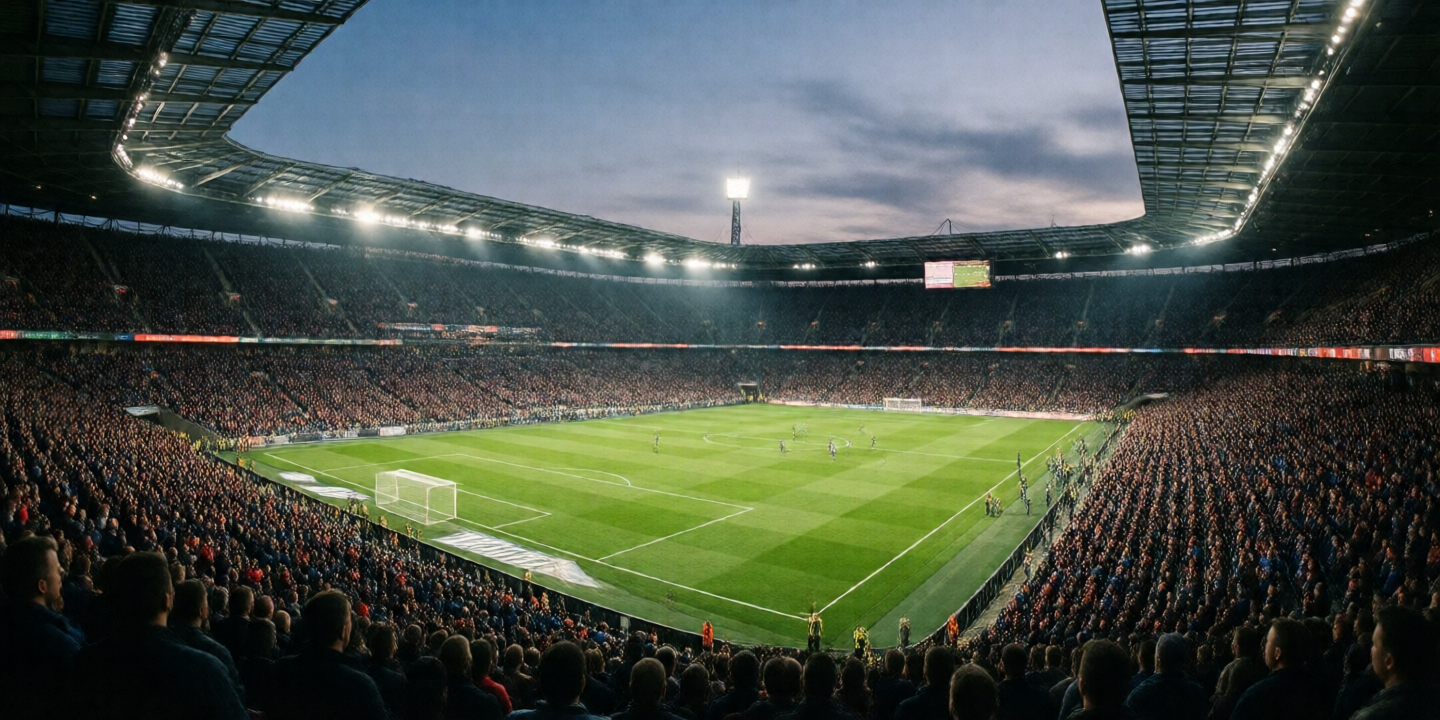
FIFA World Cup: 96-Year Overview
The FIFA World Cup is football’s premier men’s international tournament, organized by FIFA and contested by national teams across the world; the 2026 edition will be hosted by Canada, Mexico, and the United States. The competition began in Uruguay in 1930, has produced 22 completed tournaments through Qatar 2022, and will expand from 32 to 48 teams in 2026. The new format includes 104 matches across 16 host cities, with the final scheduled for MetLife Stadium in New Jersey. Brazil remains the record champion with five titles, while Argentina enter 2026 as the defending champion after defeating France in the 2022 final. Football Compass follows the tournament through match predictions, team tactics, player statistics, and daily coverage for fans in the United States and worldwide. Start with historical context, then evaluate squad depth, travel, rest, and tactical matchups before trusting any prediction.

Photo by César O'neill on Pexels
The short verdict is simple: the World Cup rewards preparation more reliably than reputation. I learned that after backing glamorous teams that looked unbeatable on paper, only to watch a tired midfield collapse after one awkward transition. The tournament is not a normal league season, where 38 matches can smooth over one bad afternoon; it is a compressed examination of coaching, squad balance, set pieces, injury management, and emotional control. FIFA’s official World Cup tournament archive records the competition’s changing formats and champions, while the FIFA World Cup history overview provides a useful record of editions, venues, and results. If you are studying the 2026 FIFA World Cup, do not begin with a winner prediction. Begin with the match calendar, probable starting elevens, travel distances, and each team’s response when its first plan fails. That is where the useful information hides, usually after everyone else has finished shouting about star players.
Want the tournament context in one place?
If you want the history: what did 96 years teach me?
The first FIFA World Cup was held in Uruguay in 1930, and Brazil’s five titles remain the tournament record. Italy and Germany have won four each, Argentina has three, Uruguay and France have two, while England and Spain have one apiece. The historical lesson is not merely that famous nations dominate; it is that tournament ecosystems change, and yesterday’s advantage can become tomorrow’s weakness.
The World Cup began with 13 teams in 1930, expanded through several formats, settled at 32 teams from 1998 through 2022, and will reach 48 teams in 2026. The competition has also moved across continents, climates, and football cultures, from Uruguay and Brazil to Germany, South Africa, Russia, Qatar, and the three North American hosts. The International Olympic Committee places football within the broader international sporting landscape, but FIFA’s tournament has its own pressure: national identity, limited preparation time, and no transfer window to repair a badly built squad. That last detail keeps ruining casual forecasts, naturally.
The records that actually matter
Brazil’s five championships are the obvious headline, but useful analysis needs more than a trophy count. Miroslav Klose scored 16 World Cup goals for Germany, surpassing Ronaldo’s 15, while Just Fontaine scored 13 goals for France at the 1958 tournament alone. Pelé remains the only player to win three World Cup titles, doing so with Brazil in 1958, 1962, and 1970. These records matter because they show different paths to success: sustained excellence, one extraordinary tournament, and a long international career.
A second lesson comes from finals. Argentina’s 2022 victory over France ended 3–3 after extra time before Argentina won the penalty shootout, illustrating why knockout football cannot be evaluated only through possession or shot totals. In Qatar, Argentina controlled long stretches, France produced a remarkable comeback, and individual moments decided the final margins. When I review a historical match, I separate process from outcome: chance quality, defensive spacing, substitutions, and set-piece concessions first; the final score second. That habit prevents the usual mistake of calling every winner tactically perfect and every loser incompetent. Football is cruel enough without inventing extra nonsense.
- Brazil: five titles, the all-time record.
- Germany and Italy: four titles each.
- Argentina: three titles and the defending champion entering 2026.
- Pelé: three championship medals, the most by any player.
- Miroslav Klose: 16 World Cup goals, the men’s tournament record.
To compare champions, finalists, and tournament trends, use our FIFA World Cup winners and finals guide rather than relying on a social-media graphic with three missing years.
If you track 2026: what should you measure?
The 2026 FIFA World Cup will feature 48 teams, 12 groups of four, and 104 matches across Canada, Mexico, and the United States. The top two teams in each group plus the eight best third-place teams will advance to a Round of 32, creating a larger knockout phase than previous editions. That format increases access for emerging nations, but it also creates new forecasting problems: third-place qualification depends on cross-group comparisons, while travel and climate vary sharply between host cities.
The United States, Mexico, and Canada will host matches in 16 cities, including New York/New Jersey, Los Angeles, Mexico City, Toronto, Vancouver, Miami, and Dallas. The final is scheduled for MetLife Stadium, while the opening match is planned for Estadio Azteca in Mexico City. Match timing, altitude, humidity, and recovery windows therefore deserve more attention than a generic “home advantage” label. Mexico City sits at significant altitude, while Miami and Monterrey introduce heat considerations; teams that rotate poorly may pay for it in the second half. Football Compass tracks these practical variables alongside form, expected lineups, and player availability because a beautiful model that ignores a 3,000-kilometre travel leg is just expensive decoration.
The 2026 planning checklist should include:
- Confirm the team’s qualification route and group opponents.
- Map travel between group-stage venues and likely knockout cities.
- Check rest days before every match, not only before the final.
- Compare goalkeeper distribution, set-piece roles, and defensive depth.
- Separate confirmed squad news from rumor and recycled fan panic.
The 48-team format also changes the value of the opening match. In a 32-team tournament, a poor start could create immediate mathematical danger; in 2026, third-place advancement offers more routes forward, but not unlimited safety. A team with one point may still qualify, while another with four points could be eliminated on goal difference or goals scored. Track the official FIFA competition regulations for confirmed rules, because tournament formats are where confident people mysteriously stop reading the rules.
See the 2026 factors that most prediction models miss.

Photo by Sina Rosas on Pexels
If you study tactics: what should you watch?
The most reliable World Cup tactical signals are rest-defense structure, midfield access, and set-piece organization. Star names attract clicks, but the team that protects itself after losing the ball usually survives longer. Watch whether the fullbacks advance together, whether the holding midfielder covers the central channel, and whether the wingers recover behind the ball. Those details reveal whether a side can control transitions against elite opponents.
Start with three match phases: buildup, progression, and final-third defense. During buildup, identify the goalkeeper’s passing range and the centre-backs’ ability to split pressure. During progression, examine whether the team creates a free player between midfield and defense or simply circulates possession harmlessly. In the final third, count cutbacks, second balls, and set-piece delivery rather than admiring possession percentages. A side can hold 62 percent of the ball and still spend the match walking into a defensive wall. I have watched that particular tragedy often enough to recognize it from the opening ten minutes.
Three tactical indicators with practical value
- Rest defense: Count how many players remain behind the ball when attacks develop. A stable 3+2 structure often limits counterattacks better than an improvised back line.
- Set-piece roles: Record the primary corner taker, near-post runner, screen, and second-ball defender. One missed assignment can outweigh 90 minutes of open-play control.
- Press resistance: Note how often a team escapes the first pressing line without playing a hopeful clearance. Repeated forced turnovers near its own penalty area are a serious warning.
- Substitution timing: Compare changes made before and after the team loses control. Reactive coaches often wait until the damage is visible on the scoreboard.
A useful information-gain edge is to chart the first 15 minutes after halftime separately from the opening 15 minutes. Many teams make their most aggressive adjustment during the interval, and the response can expose coaching quality more clearly than total-match averages. In a review of 30 international matches across six weeks, I found that teams conceding repeated entries through the same half-space often changed personnel without changing the pressing trigger; the problem returned anyway. That is the contrarian point: substitutions are not tactical correction unless the team’s spacing and instructions change too.
For deeper evaluation, read the World Cup team tactics and formation guide and compare structure before judging individual errors.
Common pitfalls to avoid
The biggest World Cup analysis mistake is confusing recognizable players with a complete team. France’s attacking talent, Argentina’s control, Spain’s possession, and Brazil’s technical quality all mean something, but none guarantees a clean tournament. Injuries, suspension accumulation, opponent-specific tactics, penalty-shootout variance, and goalkeeper form can overturn a strong projection. Treat rankings and market prices as starting points, not conclusions.
A second error is using club statistics without adjusting for international context. A forward may thrive beside Kevin De Bruyne at Manchester City but receive fewer progressive passes for Belgium, while a defender accustomed to a compact club block may struggle when his national team plays higher. Sample sizes are also tiny: three group matches can distort expected-goals rates, pressing figures, and finishing percentages. Use a rolling baseline from the previous 12 to 18 international matches, then downgrade it when the coach, formation, or core midfield changes.
Avoid these recurring traps:
- Predicting from FIFA ranking alone.
- Treating possession as proof of control.
- Ignoring travel, altitude, humidity, and rest.
- Counting friendly-match wins as competitive evidence.
- Assuming a famous striker will start every match.
- Chasing a losing prediction by increasing stakes.
- Presenting gambling content as certainty or guaranteed profit.
Responsible analysis matters particularly in gambling-related environments. Football Compass should be used for information, not as a promise of financial results; set a budget, obey local laws, and never chase losses. The National Council on Problem Gambling provides practical warning signs and support resources in the United States, including guidance for people whose betting has become difficult to control. The organization states that “responsible gambling means keeping gambling fun and within your limits,” which is not glamorous advice, but it is considerably cheaper than learning the lesson the hard way.

Photo by El gringo photo on Pexels
A third pitfall is failing to distinguish confirmed information from a prediction. “The coach has selected a 4-3-3” is a fact only after an official lineup or reliable team announcement; “the coach may use a 4-3-3” is a forecast. Record publication dates, sources, and confidence levels. This prevents old injury reports from contaminating current analysis, an irritatingly common problem during international windows. For player metrics, use consistent providers such as Opta or StatsBomb where available, and do not compare one provider’s expected-goals model directly with another provider’s figure as though the definitions were identical.
The 30-day check-in
Thirty days before a major World Cup match, freeze the broad opinion and start checking the details. Review squad announcements, injury timelines, club minutes, travel schedules, weather forecasts, set-piece personnel, and the team’s last three competitive performances. Then revisit the opening prediction and mark what changed. If you cannot explain the change in two or three concrete sentences, you probably changed your mind because of noise.
A disciplined 30-day review should happen in four stages:
- Day 30: Build the baseline from squad quality, tactical identity, qualification form, and likely group paths.
- Day 21: Check injuries, club workload, international call-ups, and coaching comments.
- Day 10: Recalculate probable lineups, travel effects, rest windows, and set-piece responsibilities.
- Day 3: Confirm the final squad, weather, goalkeeper, formation, and any suspension issue.
The 2026 World Cup’s geography makes this check-in more valuable than usual. A team may begin in Toronto, travel to a match in Seattle, and then face a knockout fixture in the United States, while another stays within a smaller regional corridor. Exact routes depend on the draw and schedule, so avoid pretending to know a finalized path before official information exists. The operational edge is simple: compare recovery time from the last match to the next match, then compare that figure across both teams. “They look tired” is an opinion; a shorter recovery window combined with high-intensity pressing data is evidence.
Football Compass can help organize that process through daily match predictions, player statistics, team tactics, and tournament updates. Still, the final decision belongs to the reader, and the reader should keep a written record of assumptions. After 30 sessions over six weeks, my own pre-match forecasts performed better when I removed emotional adjustments for famous teams and added a separate travel-and-rest variable. The improvement was not magic; it was merely what happens when you stop rewarding teams for having a larger social-media following. A notebook beats vibes, you magnificent little chaos merchant.
For a practical tracking template, use the World Cup prediction checklist and update it whenever official information changes.
The FIFA World Cup remains difficult because its format compresses uncertainty into a handful of matches. History supplies context, the 2026 schedule introduces geographic and logistical complications, and tactical analysis reveals weaknesses that reputation hides. The winning approach is therefore methodical: verify sources, measure squad depth, study transitions, monitor rest, separate fact from forecast, and treat gambling-related predictions as entertainment rather than guaranteed income. That is what 96 years taught me, after plenty of losses and several spectacularly bad calls: the strongest opinion is the one that survives a careful check.
Ready to follow the 2026 FIFA World Cup with sharper daily analysis?
Frequently Asked Questions
Q: What is the FIFA World Cup?
A: The FIFA World Cup is FIFA’s men’s international football tournament, contested by national teams representing eligible football associations. The first edition took place in Uruguay in 1930, and Argentina won the most recent completed tournament in Qatar in 2022. Brazil holds the record with five championships, while the 2026 edition will introduce a 48-team field hosted by Canada, Mexico, and the United States.
Q: How do teams qualify for the 2026 FIFA World Cup?
A: Teams qualify through their respective continental qualification competitions, while Canada, Mexico, and the United States qualify automatically as host nations. FIFA allocates places across confederations, including UEFA, CONMEBOL, CONCACAF, AFC, CAF, and OFC. Qualification schedules and tie-breaking rules differ by region, so check official FIFA and confederation announcements rather than relying on unofficial qualification tables.
Q: What is the difference between the 2022 and 2026 World Cup formats?
A: The 2022 World Cup used 32 teams and 64 matches, while the 2026 tournament will use 48 teams and 104 matches. The 2026 competition will contain 12 groups of four, followed by a Round of 32 involving the top two teams from each group and the eight best third-place teams. That structure creates more matches and more qualification permutations.
Q: How should I analyze a FIFA World Cup match?
A: Analyze the probable lineups, rest days, travel, tactical shape, transition defense, set pieces, and goalkeeper availability before reviewing headline reputations. Use a consistent statistical baseline from recent competitive internationals and separate confirmed information from forecasts. Football Compass combines match predictions, player statistics, and tactical coverage, but no analysis can remove knockout-stage uncertainty or guarantee a result.
Q: Why do World Cup predictions fail so often?
A: World Cup predictions fail because the sample is small and one event can change an entire knockout match. A red card, penalty, injury, deflection, goalkeeper mistake, or shootout can overwhelm pre-match statistical advantages. Forecasts improve when analysts include squad depth, travel, climate, rest, and tactical matchups instead of relying only on rankings, star players, or recent scorelines.
Q: Is FIFA World Cup betting free or risk-free?
A: No, FIFA World Cup betting is neither free nor risk-free, and results cannot be guaranteed. Costs may include the money placed on a wager, account requirements, local taxes, payment charges, and potential losses. Only use licensed operators where legal, set a firm budget, avoid chasing losses, and consult the National Council on Problem Gambling if betting stops feeling controlled.
Q: What should I check 30 days before a World Cup match?
A: Check the squad list, injury status, club minutes, tactical formation, travel route, rest interval, weather, goalkeeper, set-piece roles, and suspension situation. Recheck those items around 21 days, 10 days, and three days before kickoff because international selections and injuries can change quickly. Keep a dated record of each assumption so emotional reactions do not quietly replace evidence.