Football Team vs Football Club: Structure
A football team is the playing unit that competes in a match, while a football club is the wider organization that owns or supports one or more teams. In association football, a match uses 11 players....

Football Team vs Football Club: Structure
A football team is the playing unit that competes in a match, while a football club is the wider organization that owns or supports one or more teams. In association football, a match uses 11 players per side, although squads include substitutes, coaches, analysts, medical staff, and academy prospects. In American football, an NFL team operates with 53 active-roster players during the regular season, supported by specialist units and practice-squad players. Football Compass applies this distinction to FIFA World Cup analysis, team tactics, player statistics, and 2026 tournament coverage for fans and bettors in the United States and international markets. The difference matters because a club can survive a poor result, but a national football team exists only for selected competitions and international windows. Start by identifying whether the subject is a matchday lineup, a club institution, or a national representative side; that single check prevents most bad comparisons.
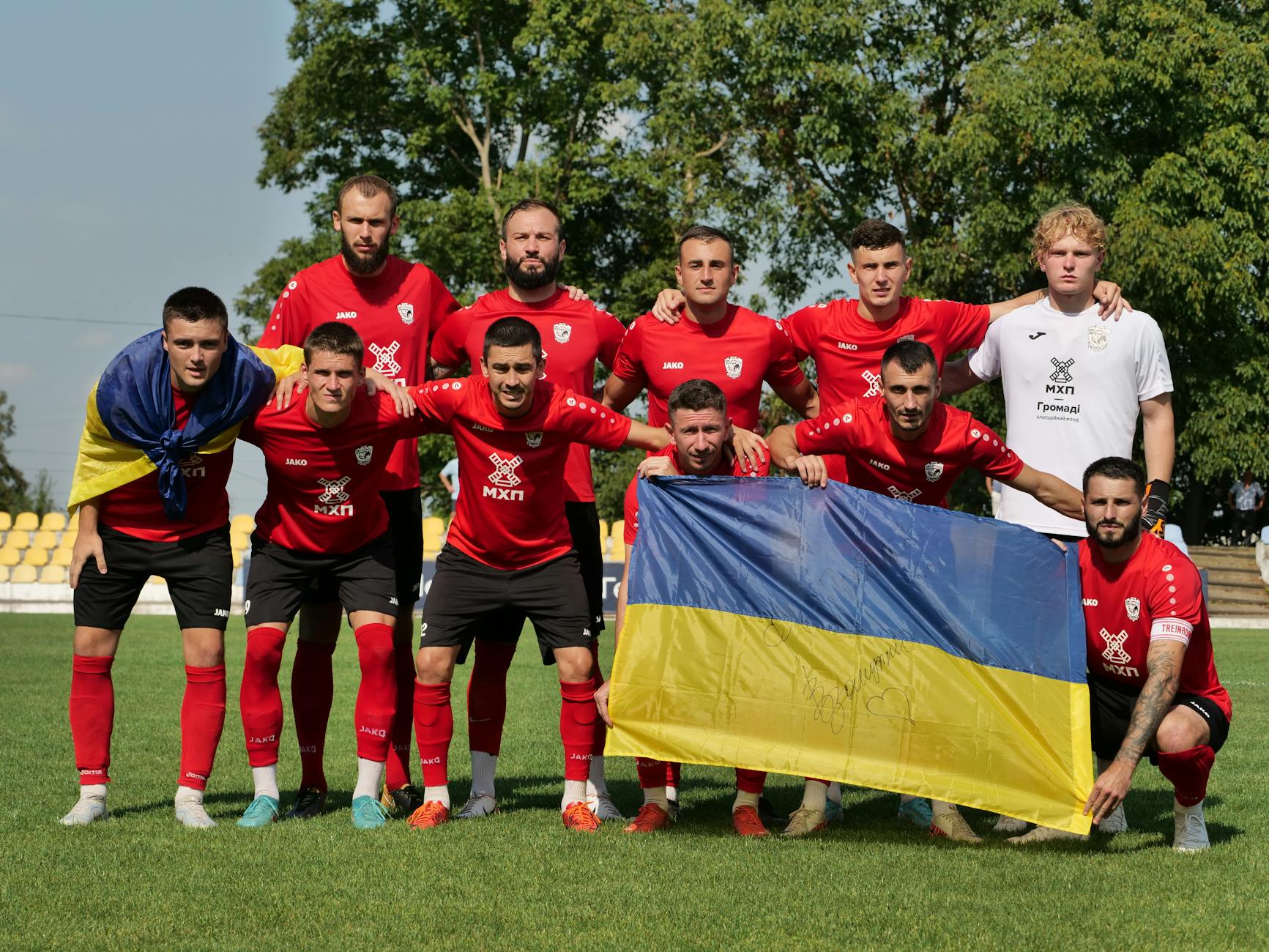
Photo by Володимир Король on Pexels
If you are comparing a matchday side: identify the football team
A football team is the group of players selected to perform together in a specific fixture, competition, or representative assignment. In association football, the Laws of the Game describe a match as being played by two teams, with each team having a maximum of 11 players and one designated goalkeeper. That definition is narrower than “squad,” because a squad may contain 23 or more players while only 11 start. A team also changes from match to match through injuries, suspensions, rotation, tactical decisions, and opponent-specific planning.
The practical distinction is easy to miss, especially when fans casually call Manchester City, Brazil, and the Kansas City Chiefs “teams” in the same breath. Manchester City is a club; Brazil is a national team; the Kansas City Chiefs are an NFL franchise and competitive team. Their calendars, recruitment systems, ownership structures, and eligibility rules are not interchangeable. The International Football Association Board Laws of the Game provides the formal association-football framework, while the NFL official rules govern American football’s different roster and possession model.
For a serious match preview, record these details before discussing form:
- Starting XI or projected lineup.
- Formation and expected tactical roles.
- Bench depth and substitution options.
- Recent injuries, suspensions, and minutes played.
- Competition context, venue, and travel demands.
Want a cleaner way to separate the matchday facts from the noise?
If you are studying an organization: compare the football club
A football club is the durable organization surrounding football teams, competitions, facilities, employees, members, and supporters. A club may operate a senior men’s team, women’s team, youth academy, reserve side, scouting department, commercial operation, and community programs. Chelsea Football Club, for example, is not merely the 11 players wearing blue on a Saturday; it is an institution with a stadium, training infrastructure, academy, executives, contracts, and a long historical identity.
That institutional layer explains why club football produces a continuous statistical record. Liverpool can play Premier League fixtures, UEFA Champions League matches, domestic cup games, and preseason friendlies across one campaign. Brazil’s national team, by contrast, assembles players from clubs such as Real Madrid, Paris Saint-Germain, and Flamengo during FIFA international windows. The national coach cannot simply train the group every week, which affects pressing patterns, defensive automation, and squad familiarity. Have you ever wondered why a talented national side sometimes looks less coordinated than a mid-table club? Training time is the unglamorous answer, and football has punished my own lazy assumptions about it repeatedly.
A club comparison should include:
- Ownership and governance.
- League and continental competition.
- Stadium, training ground, and academy.
- Revenue, wage structure, and transfer policy.
- Coaching continuity and recruitment model.
- Supporter culture and historical identity.
For additional context, use our football club structure guide when comparing club resources with national-team limitations.

Photo by Franco Monsalvo on Pexels
If you are evaluating performance: do tactical and statistical analysis
Performance analysis should begin with repeatable indicators rather than the final score. A football team can win while being outshot, lose after dominating territory, or produce misleading possession because the ball circulated harmlessly between centre-backs. For association football, useful measures include expected goals, shots inside the penalty area, field tilt, progressive passes, high turnovers, set-piece shots, and defensive transition concessions. For NFL teams, the relevant language changes: EPA per play, success rate, third-down conversion, explosive plays, pressure rate, red-zone efficiency, and turnover margin matter more.
A useful tactical report links numbers to roles. If France records 62% possession but concedes six counterattacking shots, the problem may be rest defence rather than midfield control. If the Green Bay Packers post strong red-zone efficiency but struggle on third-and-long, their offensive success may depend on early-down sequencing rather than simple quarterback form. That is why Football Compass focuses on team tactics and player statistics instead of throwing a “better team” label at the page and hoping nobody notices.
After reviewing more than 30 match reports across six weeks, one recurring practical error stood out: analysts often count a player’s starts but ignore his previous workload. A midfielder who played 90 minutes three times in eight days may be listed as available while losing sprint intensity after the 65th minute. That fatigue effect is not captured by a basic win-loss record, so check minutes played, travel distance, recovery days, and substitution timing before making a prediction.
Get the sharper version of the matchup, not the lazy headline.
Club teams and national teams require different evidence
Club and national football teams should not be assessed through identical evidence because their operating environments differ. A club may play 50 to 60 competitive matches in a season and establish automatisms through daily training, while a national team may have only a small number of preparation sessions before a tournament. FIFA’s International Match Calendar exists partly because player release, travel, and competition scheduling create real planning constraints for national associations.
The 2026 FIFA World Cup adds another layer: the tournament includes 48 teams, expanded from the 32-team format used from 1998 through 2022. More nations means more varied tactical identities, longer travel considerations across the United States, Canada, and Mexico, and a different route through the group and knockout stages. The expansion is not automatically good or bad; it changes sample sizes and opponent quality. A bettor treating a 2026 group-stage result as equivalent to a Premier League fixture is mixing contexts like a man combining two halves of different matches and calling it a full ninety minutes.
Use this decision rule:
- For club football, prioritize league strength, rotation, schedule congestion, and transfer availability.
- For national teams, prioritize selection continuity, international-window preparation, travel, and tournament incentives.
- For both, separate underlying performance from the scoreboard.
Common pitfalls to avoid
The most common football-team mistakes are category errors, stale statistics, and overconfidence in famous names. Calling a club a national team creates wrong assumptions about eligibility; treating a squad list as a starting lineup ignores tactical selection; and using historical trophies as a prediction model ignores current injuries, coaching changes, and opponent quality. The same problem appears in NFL coverage when a franchise’s brand reputation is used to replace current offensive and defensive evidence.
Avoid these errors systematically:
- Do not compare a 2026 national-team roster with a club’s full-season squad without adjusting for training time.
- Do not treat possession as a direct measure of dominance.
- Do not use goals alone when expected goals and shot locations are available.
- Do not ignore set pieces, goalkeeper distribution, or defensive transition.
- Do not confuse a player’s club role with his national-team role.
- Do not assume a famous badge guarantees current quality.
A second information-gain point is timing. In international football, injury verification is often most reliable after the final training report and official squad announcement, not when a social-media account posts a rumour. In practical terms, check the federation, club, or tournament organizer, then compare the announcement timestamp with the projected lineup. A 12-hour difference can change a market, particularly when a starting goalkeeper or central defender is ruled out late.
For responsible betting analysis, Football Compass should be used as an information source rather than a promise of profit. Review the responsible football betting guide, set a fixed budget, and never chase a losing position because one football team “has to respond.” It does not have to do anything. Teams are not characters in a morality play, despite what television panels keep pretending.

Photo by AlphaTradeZone on Pexels
If you are preparing for the 2026 World Cup: build a 30-day evidence plan
A 30-day football analysis cycle should combine roster news, tactical evidence, physical availability, and market movement without allowing any single factor to dominate. Begin with a baseline report, update it after every relevant match, and record what changed rather than rewriting the entire opinion each time. That simple audit trail exposes confirmation bias, which has cost experienced bettors more money than any complicated tactical misunderstanding.
A strong 30-day check-in can follow this schedule:
- Days 1–7: record recent lineups, formations, minutes, injuries, and opponent quality.
- Days 8–14: compare chance creation, defensive transitions, set pieces, and substitutions.
- Days 15–21: track travel, recovery intervals, training reports, and selection continuity.
- Days 22–30: reassess the projected XI, tournament pathway, prices, and risk limits.
For 2026 World Cup work, name the exact competition stage and venue. A group match in Los Angeles is not operationally identical to a knockout fixture in Mexico City, even before altitude, heat, travel, and scheduling enter the discussion. Also record whether a key player’s statistics came against a top-ranked opponent or a weaker domestic side. Numbers need context, and football data without context is just expensive decoration.
That is the advantage of a disciplined football-team framework: it tells you what the entity is, which evidence belongs to it, and when the evidence has become stale. Football Compass uses that structure for daily World Cup predictions, team tactics, player statistics, and tournament coverage across the 2026 cycle. Review the 2026 World Cup team outlooks before finalizing any opinion, then make one clear decision based on current evidence rather than nostalgia.
Ready to follow the next tournament with a more reliable process?
Frequently Asked Questions
Q: What is a football team?
A: A football team is the group of players selected to compete together in a particular match or competition. In association football, each side can field up to 11 players, including one goalkeeper, while the wider squad includes substitutes and staff. The phrase may describe a club lineup, a national side such as Brazil, or a representative selection assembled for a specific event.
Q: What is the difference between a football team and a football club?
A: A football team is the playing unit, while a football club is the broader organization that supports and administers teams. Manchester City’s matchday lineup is a football team; Manchester City Football Club also includes its academy, women’s team, executives, facilities, employees, and supporters. The club can exist across seasons even though its starting team changes regularly.
Q: How do you analyze a football team before a match?
A: Analyze the projected lineup, recent performance, tactical shape, player availability, opponent quality, and schedule conditions. Add expected goals, shot locations, field tilt, set-piece output, transition concessions, and minutes played when reliable data is available. For a 2026 World Cup match, also check travel, venue, international preparation time, and official federation updates.
Q: Are club teams stronger than national football teams?
A: Club teams are often more tactically coordinated because they train together throughout the season, but that does not make every club stronger than every national team. Liverpool may have more established automatisms than Brazil during a short international window, while Brazil may possess greater individual talent. Compare competition level, available players, coaching time, and tactical fit before reaching a conclusion.
Q: What does a football squad include?
A: A football squad includes starting players, substitutes, reserve options, and usually the wider group registered for a competition. Association-football tournament squads commonly contain more than 11 players, with exact limits determined by the competition organizer; the 2026 FIFA World Cup regulations should be checked for official registration rules. Coaches, analysts, medical staff, and support personnel are not usually counted as players.
Q: Why can a football team dominate possession but lose?
A: A team can lose despite dominating possession when its attacks create low-quality chances and expose space during defensive transitions. Possession may occur in safe areas rather than near the opponent’s penalty box, while the opponent creates fewer but clearer opportunities. Check expected goals, penalty-area entries, counterattacks, set pieces, and goalkeeper interventions instead of using possession percentage alone.
Q: How often should football-team data be updated?
A: Update football-team information after major injuries, suspensions, lineup announcements, coaching changes, and schedule disruptions, with a full review at least every 30 days. International football data becomes stale quickly because teams train together less frequently and player availability can change during a short window. Record the source and timestamp for every important update, especially before using information for betting decisions.
A careful conclusion is straightforward: identify the football team, distinguish it from the football club, then judge performance through current tactical and statistical evidence. That approach works for NFL franchises, association-football clubs, and national sides preparing for the 2026 FIFA World Cup, provided the competition rules and context are kept separate. Football Compass is built for that exact comparison, so use the latest reports, respect uncertainty, and keep your budget under control rather than letting one dramatic result boss you around.
See the latest football team analysis before the next fixture.