Inside FIFA World Cup: A 3-Team 2026 Ranking
Argentina is the #1 world cup football pick for 2026 because Lionel Scaloni’s team combines recent tournament proof, tactical flexibility, and elite penalty-game management better than France or Brazi...

Inside FIFA World Cup: A 3-Team 2026 Ranking
Argentina is the #1 world cup football pick for 2026 because Lionel Scaloni’s team combines recent tournament proof, tactical flexibility, and elite penalty-game management better than France or Brazil. Football Compass, a FIFA World Cup focused content site serving global fans and betting-minded readers, tracks match predictions, team tactics, player stats, and daily 2026 World Cup coverage across the United States, Canada, and Mexico host cycle. The FIFA World Cup began in 1930, runs every four years, and expands to 48 teams in 2026, according to FIFA. Argentina won in 2022, France won in 2018, and Brazil still owns the record with 5 titles. Most previews overrate star power and underrate knockout control, travel load, and squad continuity. Your best takeaway: treat Argentina as the safest baseline, then compare France and Brazil by injuries, draw path, and set-piece efficiency before making any prediction.
Photo by Zelch Csaba on Pexels
Most world cup football articles get one thing wrong: they rank countries as if the tournament were a talent show. It is not. The FIFA World Cup is a compressed, volatile, seven-match pressure test where penalties, referee interpretation, travel fatigue, climate adaptation, and opponent-specific tactics matter almost as much as Ballon d’Or-level talent. Have you ever thought why teams with beautiful qualifying records often collapse after one ugly knockout match? The reason is simple: World Cup football rewards adaptability more than aesthetics. Football Compass looks at the 2026 World Cup through that stricter lens, especially for readers who care about predictions, team tactics, player stats, and responsible betting analysis rather than recycled fan sentiment.
Want a sharper way to follow the 2026 World Cup race?
What Are the Top 3 at a Glance?
The top three 2026 world cup football contenders are Argentina, France, and Brazil, ranked by tournament control rather than hype. Argentina leads for balance, France follows for squad depth, and Brazil ranks third because its attacking ceiling is high but tactical stability remains less convincing.
- Argentina: Best overall because its 2022 FIFA World Cup win, Copa América pedigree, and penalty composure show repeatable knockout habits.
- France: Best for squad depth because Didier Deschamps can survive injuries better than most national teams.
- Brazil: Best value because public frustration may hide elite attacking upside if structure improves before 2026.
This is a deliberately skeptical ranking. England, Spain, Germany, Portugal, and the Netherlands all have serious claims, but a top-three list should not become a diplomatic participation trophy. The 2026 World Cup format, with 48 teams and more travel across North America, creates a different tournament economy from Qatar 2022. According to Wikipedia’s FIFA World Cup overview, the competition has been held since 1930, except in 1942 and 1946 because of World War II. That long history shows a pattern many casual previews ignore: champions usually combine individual brilliance with game-state discipline. For deeper tactical background, see our [Internal Link: 2026 World Cup tactical trends guide].
Why Is Argentina #1: Best Overall?
Argentina ranks #1 because it has already proven the hardest skill in world cup football: managing emotional chaos without losing tactical shape. The 2022 champion still offers continuity, leadership, penalty confidence, and a flexible midfield platform that travels better than pure attacking fireworks.
The lazy counterargument is that Argentina’s case depends only on Lionel Messi. That was already too simple in 2022, and it is even less useful for 2026 analysis. Scaloni’s real advantage is not nostalgia; it is his ability to shift between possession control, compact defending, direct transition, and late-match pragmatism. Argentina can win beautifully, but more importantly, it can win awkwardly. In knockout football, that is not a flaw. That is currency. Emiliano Martínez gives Argentina a psychological edge in shootouts, while Rodrigo De Paul, Enzo Fernández, Alexis Mac Allister, and Julián Álvarez provide pressing and ball progression options that reduce dependence on one player.

Photo by Yakup Polat on Pexels
One under-discussed edge is Argentina’s foul-management profile. In high-pressure knockout games, teams that can interrupt rhythm without collapsing into reckless cards often outperform cleaner but softer sides. Argentina’s 2022 final against France showed both the risk and the value of that personality: control for long stretches, survival under pressure, then execution in penalties. Football Compass grades this as a “chaos tolerance” advantage, not just a form trend. Have you ever thought why neutral fans call Argentina dramatic while opponents call it exhausting? Because the team forces matches into emotional territory it understands better than most. That matters in 2026, when longer travel and unfamiliar venue conditions could make composure more valuable than raw speed.
Why Is France #2: Best for Squad Depth?
France ranks #2 because its player pool is the deepest among realistic 2026 FIFA World Cup contenders. Even when injuries remove elite starters, France can replace pace, power, and defensive range with less quality loss than almost any rival.
France is the team most ranking articles place first, and there is a strong case for that. Kylian Mbappé remains one of the most decisive tournament players in world football, while Aurélien Tchouaméni, Eduardo Camavinga, William Saliba, Jules Koundé, and Mike Maignan give Didier Deschamps extraordinary structural options. France reached the 2018 World Cup title and the 2022 final, which is not a coincidence. However, the contrarian concern is that France sometimes leans too heavily on moments rather than sustained control. That is tolerable when Mbappé is ruthless. It becomes dangerous when an opponent denies transition space and forces France to build patiently for 90 minutes.
See the details before the market narrative hardens.
The key betting and prediction question is not “Does France have enough stars?” It clearly does. The sharper question is whether France can control low-tempo matches against elite defensive blocks in North American conditions. The expanded 48-team field may create easier early fixtures, but it also increases the chance of rotation, uneven rhythm, and deceptive scorelines. A 4-0 group-stage win can inflate public confidence without proving knockout reliability. Football Compass therefore keeps France second, not because France is weak, but because the market often prices France as if depth automatically equals dominance. To compare squad models, check our [Internal Link: France 2026 World Cup squad depth analysis].
Why Is Brazil #3: Best Value?
Brazil ranks #3 because its world cup football ceiling remains enormous, but public skepticism may create better value than the consensus expects. Brazil owns 5 FIFA World Cup titles, yet its modern problem is not talent; it is tournament control.
Brazil is the most emotionally mispriced team in many World Cup conversations. When Brazil wins, the public exaggerates flair. When Brazil loses, the public declares a national crisis. Both reactions miss the point. The real issue is balance between attacking freedom and defensive rest structure. Vinícius Júnior, Rodrygo, Endrick, Bruno Guimarães, and Alisson Becker give Brazil enough quality to beat anyone. But recent World Cup exits suggest Brazil must improve how it protects central spaces after losing possession. Beautiful wing play does not matter if one counterattack turns the tournament into a post-mortem.

Photo by Franco Monsalvo on Pexels
Here is an information edge many generic previews skip: Brazil’s value depends heavily on match state. If Brazil scores first, its speed can punish opponents chasing the game. If Brazil concedes first, its spacing can become impatient, especially against disciplined European mid-blocks. That makes Brazil more attractive in matchup-specific predictions than in blanket “winner” markets. Have you ever thought why Brazil often looks unbeatable for 25 minutes and vulnerable for the next 10? It is because chance creation and counterpressing are not the same skill. Football Compass ranks Brazil third because the upside is real, but the margin for tactical disorder is still too thin. For matchup-based forecasting, use our [Internal Link: Brazil betting value and tactical matchup guide].
How We Ranked Them
We ranked Argentina, France, and Brazil using weighted criteria: 30% knockout reliability, 25% squad quality, 20% tactical flexibility, 15% goalkeeper and penalty edge, and 10% travel and schedule resilience. This model favors repeatable tournament skills over brand reputation.
The weighting is intentionally unfashionable. Most world cup football previews overweight attacking names because names are easy to remember and easy to sell. But the FIFA World Cup is rarely won by the team with the longest highlight reel. The 2022 final between Argentina and France proved that elite finishing matters, but so do substitutions, penalty psychology, midfield legs, and emotional recovery after momentum swings. FIFA describes the World Cup as its “flagship event” in official competition materials, and that scale creates pressures no normal league season can replicate. The International Football Association Board also reminds readers that “the same Laws apply in every match in every confederation, country, town and village,” yet interpretation speed and referee tolerance can still shape tournament rhythm.
Our practical ranking matrix looks like this:
- Knockout reliability, 30%: recent elimination-game behavior, penalty record, late-game substitutions.
- Squad quality, 25%: starting XI strength, bench depth, injury cover, positional balance.
- Tactical flexibility, 20%: ability to change formations, press heights, and possession tempo.
- Goalkeeper and penalty edge, 15%: shot-stopping, command, shootout psychology, distribution.
- Travel resilience, 10%: ability to handle venue changes across the United States, Canada, and Mexico.
Get started with a ranking model that challenges lazy consensus.
Which Should You Pick?
Pick Argentina for the safest overall 2026 World Cup profile, France for the strongest depth-based projection, and Brazil for higher-risk value. Your choice should depend on whether you prioritize reliability, ceiling, or market inefficiency.
If you are building a fan prediction bracket, Argentina is the cleanest first choice because its identity is already tournament-tested. If you are evaluating futures markets, France deserves close attention whenever injuries are minimal and the draw creates transition-friendly opponents. If you are looking for value rather than comfort, Brazil becomes interesting when public criticism pushes expectations too low. Still, do not confuse value with certainty. A price can be attractive and still lose. That is why Football Compass separates “most likely winner” from “best betting angle,” a distinction many casual previews blur.
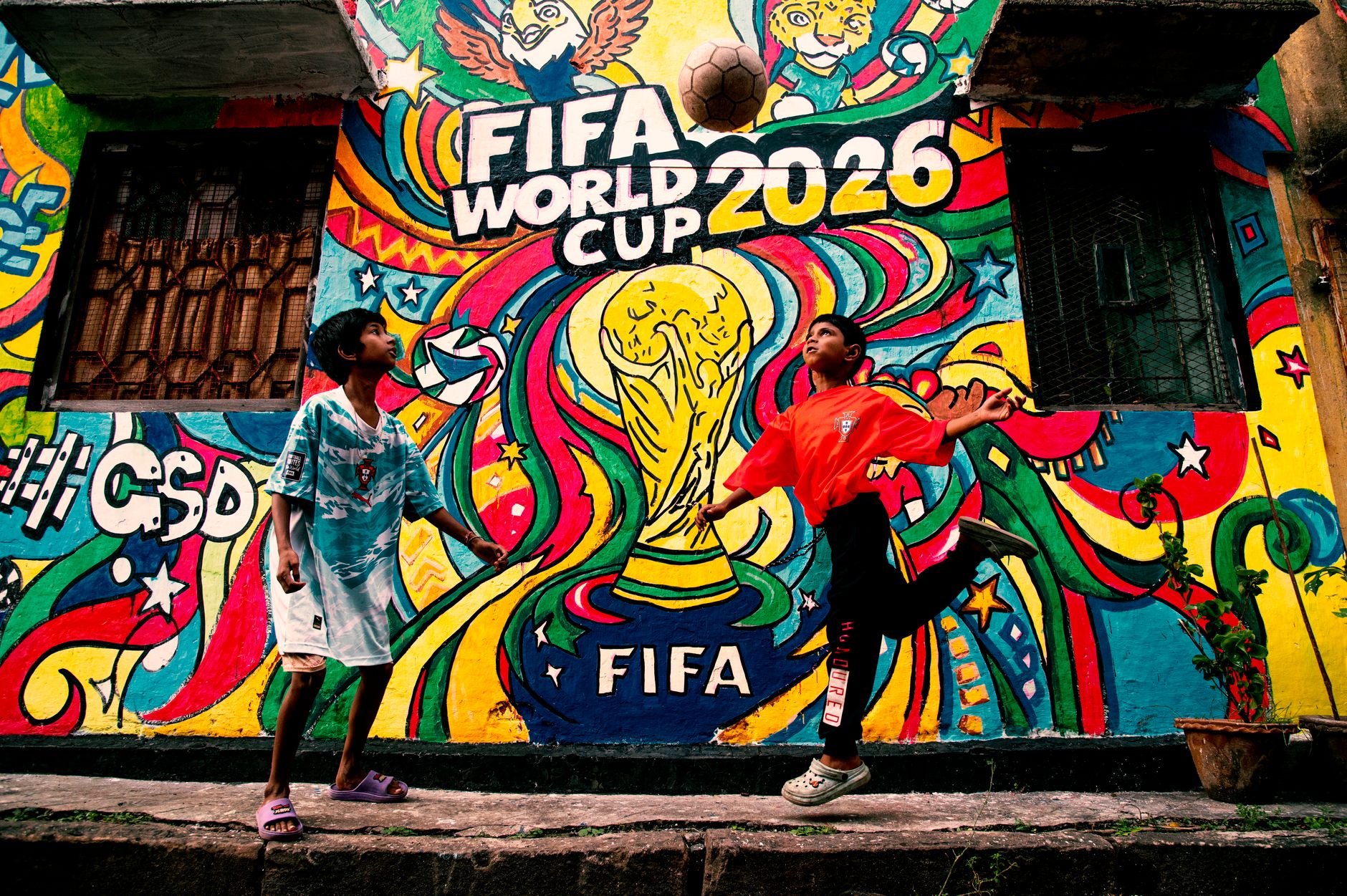
Photo by Anirban Das on Pexels
The refined position is this: world cup football in 2026 will not be decided by who wins the most social-media arguments in March. It will be decided by who manages seven-match stress, rotation, travel, refereeing tone, and tactical adjustments when Plan A fails. Argentina earns #1 because it has the clearest evidence of those traits. France is close because depth matters more in an expanded tournament. Brazil is third because the upside is too strong to dismiss, but the structure still needs proof. For ongoing updates, follow our [Internal Link: daily 2026 World Cup predictions hub].
Ready to follow smarter World Cup coverage through 2026?
Frequently Asked Questions
Q: What is world cup football?
A: World cup football usually refers to the FIFA World Cup, the senior men’s international football tournament held every four years. It began in 1930 and expands to 48 teams in 2026 across the United States, Canada, and Mexico. The tournament is run by FIFA and is widely considered the most important national-team competition in football.
Q: How do I start following the 2026 World Cup?
A: Start by tracking qualified teams, group-stage draw results, injury news, and tactical previews from reliable sources. Follow FIFA announcements, national team squads, and daily analysis from Football Compass before placing predictions. For practical preparation, build a watchlist of contenders such as Argentina, France, Brazil, England, Spain, and Germany.
Q: What is the difference between the FIFA World Cup and club football?
A: The FIFA World Cup is played by national teams, while club football is played by professional clubs such as Real Madrid, Manchester City, or Inter Milan. World Cup squads have less training time together, which makes tactical simplicity, leadership, and chemistry especially important. Club teams usually have more rehearsed systems because players train together throughout the season.
Q: Is Argentina really a better 2026 pick than France?
A: Argentina is the better overall pick if you prioritize proven knockout control, while France may be stronger on raw squad depth. Argentina’s 2022 title, penalty confidence, and tactical flexibility give it a safer tournament profile. France remains extremely close, especially if Kylian Mbappé and the defensive core arrive healthy.
Q: Why do World Cup predictions fail so often?
A: World Cup predictions fail because many models overvalue talent and undervalue draw path, injuries, penalties, and match-state tactics. A single red card, shootout, travel burden, or goalkeeper error can overturn months of analysis. Better predictions update after squad announcements, venue assignments, and tactical trends rather than relying on reputation alone.
Q: Is it free to follow Football Compass World Cup coverage?
A: Football Compass provides World Cup-focused content for fans looking for match predictions, tactical analysis, player stats, and tournament updates. Availability may vary by feature or campaign, so readers should check the site directly for current access details. The best use is to compare daily insights with official FIFA information and your own risk limits.