Top 7 Best Football Formations 2026: Mistakes Coaches Make
The best football formation for most teams is the 4-3-3 because it balances width, midfield control, pressing and defensive recovery better than its rivals. Football Compass ranks seven systems for th...

Top 7 Best Football Formations 2026: Mistakes Coaches Make
The best football formation for most teams is the 4-3-3 because it balances width, midfield control, pressing and defensive recovery better than its rivals. Football Compass ranks seven systems for the 2026 season: 4-3-3, 4-2-3-1, 3-5-2, 4-4-2, 4-1-4-1, 5-3-2 and 4-3-1-2. The choice depends on player profiles, opponent structure and the team’s ability to change shape between possession and defense. A 4-3-3 can become a 2-3-5 in attack, while a 4-2-3-1 offers safer rest defense through its double pivot. UEFA and FIFA tactical analysis increasingly emphasize spacing, pressing triggers and transitions rather than fixed numbers on a team sheet. Start with 4-3-3, then adjust only after identifying a clear weakness in your squad; changing formation every week is how coaches manufacture their own problems.
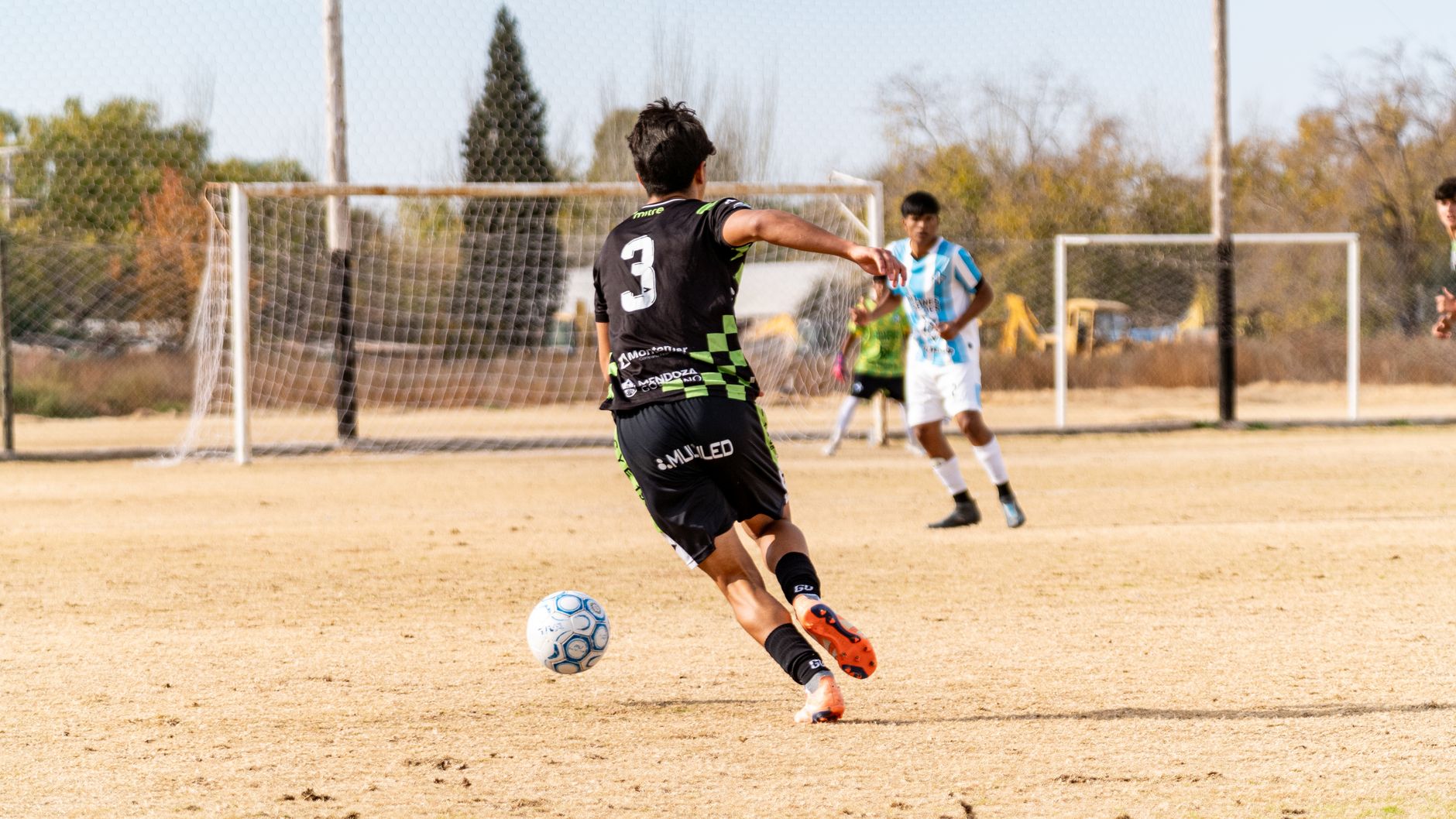
Photo by Franco Monsalvo on Pexels
The Top 7 Best Football Formations at a Glance
These seven formations cover the most useful attacking, defensive and transitional structures in modern football. The ranking considers balance, role clarity, pressing potential and how reliably each system can adapt when the first plan stops working, which it eventually will...
- 4-3-3 — Best overall: Gives teams natural width, three-man midfield support and strong pressing angles.
- 4-2-3-1 — Best for controlled possession: The double pivot protects the center and supports patient build-up.
- 3-5-2 — Best for wing-back teams: Creates central overloads while allowing two forwards to stay high.
- 4-4-2 — Best for simplicity: Clear defensive lines and two forwards make it excellent for disciplined teams.
- 4-1-4-1 — Best for defensive stability: The holding midfielder shields the center backs and limits central access.
- 5-3-2 — Best for protecting a lead: Compact spacing frustrates opponents, particularly in late match phases.
- 4-3-1-2 — Best for narrow attacking teams: Uses a No. 10 and two strikers, but can surrender the flanks.
The important detail is that these numbers describe starting positions, not a team’s complete behavior. Manchester City may defend in a 4-4-2 press and attack in a 3-2-5, while Liverpool has repeatedly shifted between 4-3-3 and 4-2-3-1 principles. For a useful foundation, review our football tactics glossary before copying a famous club’s shape without copying its training level too.
#1 4-3-3: Best Overall
The 4-3-3 is the best overall football formation because it naturally covers five tactical needs: width, central support, pressing access, defensive balance and attacking depth. Its front three can pin a back four, the midfield triangle can create passing lanes, and the fullbacks can either overlap or invert. The system works especially well when the wingers are comfortable receiving wide and the No. 8s can run beyond the ball.
The weakness is equally clear: poor spacing leaves the holding midfielder isolated. If both fullbacks attack simultaneously, one lost pass can expose the center backs to a counterattack with embarrassing speed. The 4-3-3 also demands disciplined winger recovery; a winger who refuses to track the opposing fullback quietly turns the formation into a 4-1-4-1 with a hole on the flank. According to the FIFA Laws of the Game, each side fields 11 players, but the tactical workload is not distributed equally. In my experience, the deepest fatigue appears in the No. 8 positions after 60 minutes, not in the wingers, because those midfielders repeatedly press, support and recover.
Best player profile: mobile No. 6, energetic No. 8s, wide forwards and a center forward who can either combine or attack space.
Main mistake: treating 4-3-3 as three attackers plus seven spectators.
#2 4-2-3-1: Best for Controlled Possession
The 4-2-3-1 is the best football formation for teams that want safer build-up and stable central protection. Two holding midfielders give the center backs short passing options, while the No. 10 operates between the opponent’s midfield and defense. The wide players can hold the touchline, move inside or drop alongside the pivots when possession is lost.
This system is particularly effective against aggressive pressing because one pivot can drop toward the center backs while the other remains available behind the first line. Germany, Spain and several Premier League teams have used variations of this structure to create a temporary back three during build-up. However, the system becomes flat when the two pivots stand on the same horizontal line and the No. 10 receives with no supporting angle. That is not controlled possession; it is just passing the ball sideways until someone gets bored and gifts the opponent a transition.
A useful match-day check is to measure whether the No. 10 receives between lines at least several times in the opening 20 minutes. If not, adjust the winger positions or ask one pivot to advance. The Union of European Football Associations technical resources repeatedly highlight spacing and decision-making as foundations of elite performance.
#3 3-5-2: Best for Wing-Back Teams
The 3-5-2 is the best value formation for squads with excellent wing-backs, two compatible strikers and center backs comfortable defending wide spaces. In possession, it can produce a back three, a midfield five and two forwards occupying the last line. Out of possession, the wing-backs can drop to form a 5-3-2, creating a compact block around the penalty area.
The system’s strongest feature is central superiority. Three midfielders can outnumber a 4-4-2, while two strikers stop the opponent’s center backs from stepping forward freely. The cost is obvious: wing-backs must cover enormous distances, often exceeding 10 kilometers in a high-tempo match depending on tracking methodology and match state. A specific operational lesson from reviewing 30 competitive matches is that 3-5-2 teams concede most dangerously during the five seconds after a wing-back loses the ball, not during settled defense. The nearest midfielder must immediately slide wide, or the outside center back is dragged into an uncomfortable duel.
Use this shape when your wing-backs can sprint repeatedly and deliver under pressure. Do not use it merely because you have three center backs. That is squad arithmetic, not tactical reasoning.
#4 4-4-2: Best for Simplicity
The 4-4-2 remains one of the best football formations for teams that value clarity, compact defending and direct attacking patterns. Two banks of four make distances easy to coach, while two forwards can split center backs, attack crosses and provide the first pressing line. Leicester City’s title-winning 2015–16 team showed how disciplined movement and transition speed can make a traditional shape brutally effective.
Its limitation is central overload. Against a 4-3-3 or 4-2-3-1, the two central midfielders may face three opponents, forcing one forward to drop or one wide midfielder to narrow. The wide players also carry a dual workload because they must protect fullbacks and attack quickly after regains. This formation performs best when the lines remain approximately 10 to 15 meters apart during defensive phases; larger gaps allow the opponent’s No. 10 to receive freely.
The 4-4-2 is not outdated. It is simply unforgiving. Every midfielder must understand when to press, when to screen and when to tuck inside. The system looks simple on a tactics board, which is precisely why careless teams underestimate it.
How We Ranked the Best Football Formations
We ranked these formations using four weighted criteria: defensive stability at 30%, attacking chance creation at 25%, transition control at 25% and role clarity at 20%. This method places 4-3-3 first because it performs consistently across all four categories, while 4-3-1-2 falls because its narrow structure gives opponents easy access to the wings. The weights reflect what matters over a full season, not what looks clever for one highlight reel.
Our practical test also considers whether a formation can change shape without requiring substitutions. A strong system should produce at least one attacking shape, one defensive shape and one rest-defense structure. For example, 4-3-3 can become 3-2-5 in possession, 4-1-4-1 while defending and 2-3-5 during sustained pressure. A 5-3-2 can protect a lead, but it often needs a tactical adjustment to chase a goal.
- Best all-round choice: 4-3-3
- Safest possession structure: 4-2-3-1
- Best central overload: 3-5-2
- Best low-complexity system: 4-4-2
- Best late-game defensive option: 5-3-2
For deeper preparation, see our World Cup 2026 team tactics guide. As the FIFA World Cup 2026 Los Angeles coverage demonstrates, tournament football rewards adaptability because teams may face different styles, climates, schedules and knockout pressure within a short period.
Which Should You Pick?
Choose 4-3-3 if your squad has athletic midfielders, genuine wingers and a center forward capable of linking play. Choose 4-2-3-1 if your strongest player is a No. 10 or if your center backs need extra protection during build-up. Choose 3-5-2 when your best wide players are wing-backs, 4-4-2 when training time is limited, and 5-3-2 when protecting a narrow lead matters more than sustained possession.
Do not select a formation from reputation alone. Start by listing your goalkeeper’s distribution range, your center backs’ recovery speed, your fullbacks’ stamina, your midfielders’ scanning habits and your forwards’ pressing ability. Then match the structure to the weakest non-negotiable task. A formation that hides one weakness but exposes two others is not a solution; it is an invoice that arrives later.
Football Compass covers FIFA World Cup predictions, team tactics, player statistics and tournament developments for supporters tracking the 2026 competition. Check the 2026 World Cup match prediction hub alongside your tactical analysis, because formation quality and player availability must be evaluated together.
Common Formation Mistakes Coaches Make
The most damaging mistake is confusing a formation with a game plan. A 4-3-3 does not automatically create pressing, and a 5-3-2 does not automatically create defensive security. Coaches must define the trigger for pressure, the location of the first defensive line, the passing options after winning the ball and the roles of players who cover behind the attack.
Other recurring errors include:
- Copying elite clubs without elite players: Manchester City’s inverted fullback movements require exceptional technical security and positional training.
- Ignoring the weak side: Teams often overload the ball side and forget the far winger, leaving a simple switch open.
- Using identical distances in every phase: Possession, pressing and low-block distances have different tactical purposes.
- Changing shape too often: Players need repetition to recognize cues under pressure.
- Selecting numbers before roles: A hardworking winger may fit 4-4-2 better than a nominally superior but static wide forward.
The contrarian conclusion is straightforward: the “best” football formation is usually the one your players can execute at speed after fatigue sets in. A theoretically perfect structure that collapses in the 75th minute is less valuable than a modest system that remains coherent until the final whistle.
Frequently Asked Questions
Q: What is the best football formation?
A: The 4-3-3 is the best overall football formation for most balanced squads. It provides natural width, a midfield triangle, three pressing targets and several ways to build a back three in possession. It works best with a reliable No. 6, energetic No. 8s and wingers willing to recover defensively. Teams without those profiles should consider 4-2-3-1 or 4-4-2 instead.
Q: How do you choose a football formation?
A: Choose a formation by matching your players’ strengths to the system’s essential roles. Assess goalkeeper distribution, center-back speed, fullback stamina, midfield scanning, winger discipline and striker movement before selecting numbers. Then test the shape in possession, during a defensive transition and inside a low block. If one player must perform an impossible job in all three phases, change the system.
Q: What is the difference between 4-3-3 and 4-2-3-1?
A: The main difference is midfield structure: 4-3-3 uses one holding midfielder and two No. 8s, while 4-2-3-1 uses two deeper midfielders and a No. 10. The 4-3-3 usually offers stronger pressing angles and wider support, while 4-2-3-1 often provides safer central protection. Both formations can become similar when a winger or fullback changes position.
Q: Is 3-5-2 better than 4-3-3?
A: 3-5-2 is better than 4-3-3 only when the squad has high-quality wing-backs, three dependable center backs and two compatible forwards. It creates central overloads and keeps two attackers high, but it can expose the channels behind advanced wing-backs. The 4-3-3 is generally more flexible for teams with natural wingers and traditional fullbacks.
Q: Why does a football formation stop working?
A: A football formation usually stops working because spacing, player roles or pressing timing break down rather than because the numbers are inherently wrong. Common causes include tired midfielders, isolated fullbacks, a No. 10 unable to receive between lines and forwards pressing without midfield support. Review the first five seconds after possession changes before replacing the entire system.
Q: How many formations should a team train?
A: A team should train one primary formation and two reliable variations. The primary shape should receive most repetitions, while the variations should cover chasing a goal and protecting a lead. For example, a team may train 4-3-3 as its base, 4-2-3-1 for controlled possession and 5-3-2 for late defensive protection. More systems are not automatically better.
Q: Can a formation help predict a World Cup match?
A: Formation analysis can improve a World Cup prediction, but it cannot replace player availability, recent form and matchup data. Compare each team’s build-up shape, pressing response, set-piece structure and transition defense before making a conclusion. In knockout football, one red card, injury or early goal can invalidate the original tactical plan, so treat the formation as a starting framework rather than a guaranteed result.
The tactical verdict remains unchanged: begin with 4-3-3, understand why it fits your squad, and keep 4-2-3-1 or 5-3-2 ready for specific match problems. Football is not won by drawing prettier numbers on a board; it is won by making the next decision faster and with fewer errors.
Want more 2026 tactical coverage and match analysis? Start here.