What Nobody Tells You About Football Formations
The best football formation is not a magic code; it is the structure that matches a team’s players, pressing habits and defensive distances. In association football, the most useful modern systems are...

What Nobody Tells You About Football Formations
The best football formation is not a magic code; it is the structure that matches a team’s players, pressing habits and defensive distances. In association football, the most useful modern systems are 4-3-3, 4-2-3-1, 3-5-2 and 4-4-2, while American football uses arrangements such as the I formation, shotgun, spread and nickel defense. Football Compass covers these tactical choices for supporters tracking the 2026 FIFA World Cup, where formations can change several times during one match. A 4-3-3 may create five attacking lanes, but a poorly protected midfield can be exposed within seconds; similarly, a 3-5-2 can dominate central areas but surrender space behind wing-backs. The practical rule is simple: identify your team’s strongest players, choose the structure that protects them, then judge the formation by transition quality rather than its lineup graphic.
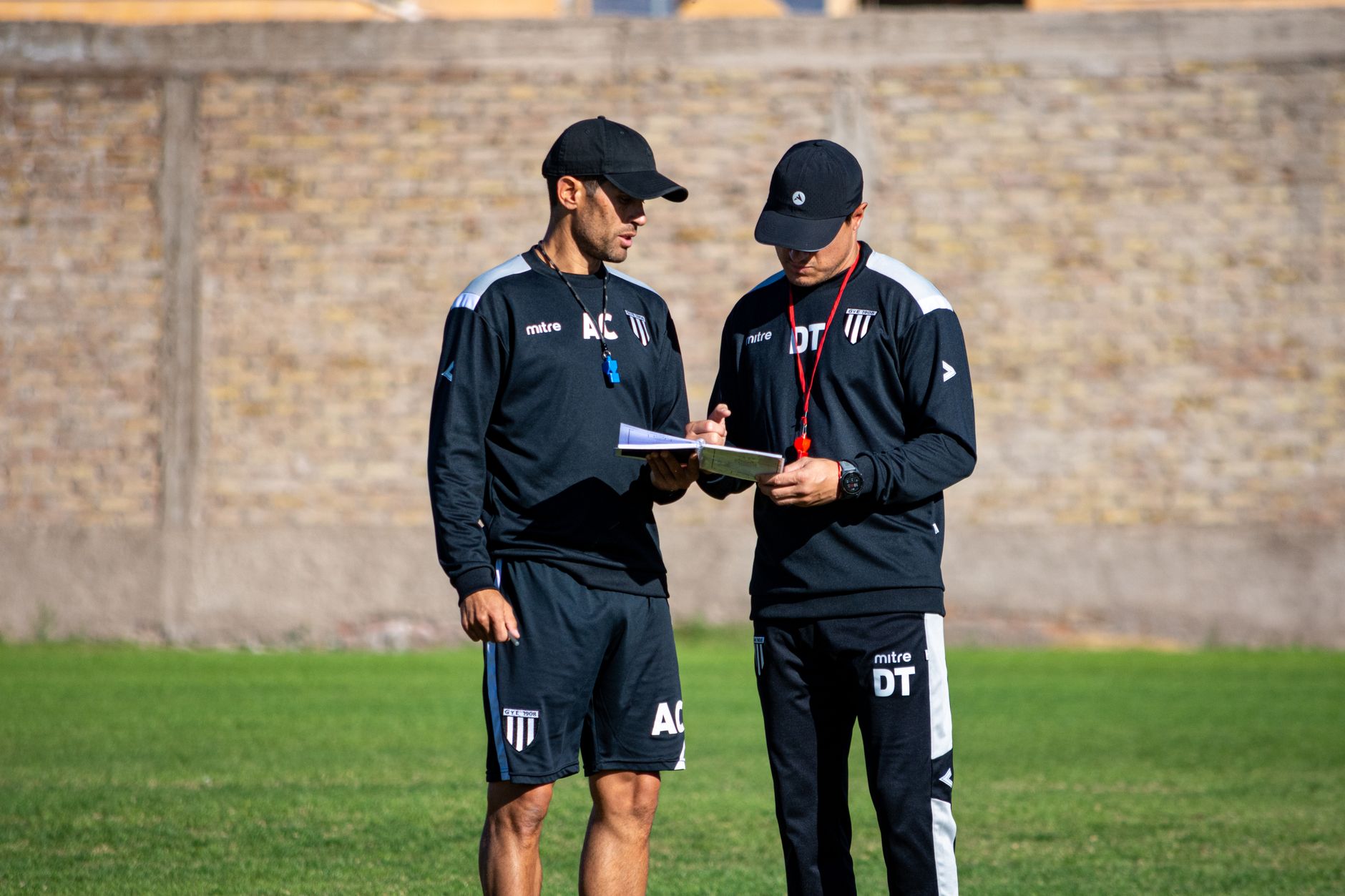
Photo by Franco Monsalvo on Pexels
Football formations are maps, not commandments. They show where players begin, not where they remain after the ball moves, which is the part that catches casual viewers napping. A 4-3-3 can become a 2-3-5 in possession, a 4-4-2 out of possession, and a complete disaster if the full-backs fly forward together without cover. I have watched enough matches—and lost enough prediction slips—to know that the printed shape is only the opening sentence of the tactical story.
Want a sharper tactical starting point? Explore Football Compass for daily match analysis and tournament coverage.
Is the 4-3-3 really the best football formation?
The 4-3-3 is often the best all-purpose football formation because it provides three central midfielders, natural width from wingers and clear pressing triggers. Its effectiveness depends on the No. 6 protecting the defense, the wingers tracking runners and the full-backs choosing their moments rather than charging forward like they have misplaced a train ticket. The system is especially strong for teams with technically secure midfielders and quick wide attackers.
The basic structure contains four defenders, three midfielders and three forwards. In possession, one full-back may invert into midfield while the opposite full-back stays deeper, creating a 3-2-5 attacking shape. This positional rotation became strongly associated with coaches such as Pep Guardiola at Manchester City, while Jürgen Klopp’s Liverpool used a more direct 4-3-3 built around pressing, transitions and aggressive overlapping.
The 4-3-3 gives a team several reliable advantages:
- Wingers pin opposition full-backs near the touchline.
- Three midfielders can form triangles around the ball.
- The front three can press the opposing back line.
- Full-backs can create overloads on either side.
- The shape can shift into 4-1-4-1 without substitutions.
However, the weak point is the space beside the lone defensive midfielder. If both interiors move forward and the full-backs are high, a counterattack can attack the channels beside the center-backs. A team using 4-3-3 must therefore control rest defense: usually three or four players remain positioned to stop the first counter after possession is lost. According to FIFA’s Laws of the Game, formations are tactical choices rather than fixed legal structures, and that distinction matters when analyzing modern football.
The 4-3-3 is not automatically superior to 4-2-3-1 or 3-5-2. It is superior when the squad can maintain width, counterpress immediately and defend the midfield’s outer lanes. Have you ever thought a team was “dominating” because it had 65 percent possession, only to discover it created two shots? That is the formation graphic winning the argument while the match quietly disagrees.
How does a 4-2-3-1 handle defensive transitions?
A 4-2-3-1 handles defensive transitions through a double pivot, usually giving the center-backs two nearby passing and screening options after possession changes. The two holding midfielders can protect the central lane, cover advancing full-backs and support the attacking midfielder. Its main risk is isolation: if the front four do not press together, the double pivot may spend the evening plugging holes with a teaspoon.
In its starting arrangement, 4-2-3-1 uses four defenders, two holding midfielders, three attacking midfielders and one striker. The wide attacking midfielders can defend in the second line, producing a compact 4-4-1-1. This makes the system attractive to coaches who want a stable block without surrendering a central playmaker.
A well-drilled 4-2-3-1 usually asks the players to perform specific tasks:
- The striker curves pressing runs to force play toward one flank.
- The wide midfielders close opposing full-backs and recover into midfield.
- The double pivot protects passes into the opponent’s No. 10.
- The attacking midfielder supports the striker without leaving the pivots exposed.
- The full-back on the ball side steps forward only when cover is available.
The system is particularly useful for teams with one outstanding attacking midfielder, such as the role Mesut Özil once occupied for Germany and Arsenal, or a modern creator operating between midfield and defense. It also suits tournament football because its defensive structure is comparatively easy to explain and repeat under pressure. Germany’s national-team identity, Real Madrid’s varying mid-blocks and many Premier League sides have all used versions of this shape, though the player profiles differ substantially.
A specific match-reading edge is worth remembering: a 4-2-3-1 can look defensive while actually producing a five-player attacking line when one pivot drops and the full-backs advance. Do not count the formation’s defensive numbers from the broadcast graphic alone. Track the distance between the two pivots and the center-backs; if that gap exceeds roughly 12 to 15 meters repeatedly, the “safe” shape is already leaking.
Read more tactical context through our [Internal Link: guide to pressing systems and defensive blocks].

Photo by Huy Phan on Pexels
Football Compass uses this kind of detail when examining matchups for the 2026 FIFA World Cup. A formation should inform a prediction, not replace one. Injuries, rest days, travel between cities and the opponent’s preferred build-up shape often matter more than whether a graphic displays a 4-2-3-1 or 4-3-3. Anyone making a confident prediction from eleven dots and no transition analysis is volunteering to be corrected by reality.
Get the practical version of the analysis before the next major fixture.
What about the 3-5-2 and the 4-4-2 edge cases?
The 3-5-2 is strongest when a team has reliable wing-backs and three center-backs comfortable defending wide spaces, while 4-4-2 remains effective for compactness, direct attacks and clear defensive roles. Both formations can solve problems that 4-3-3 cannot, but each creates predictable trade-offs: 3-5-2 risks the flanks, and 4-4-2 can surrender central numerical superiority against three midfielders.
The 3-5-2 normally features three center-backs, two wing-backs, three central midfielders and two forwards. In possession it can resemble 3-2-5, 3-4-3 or even 2-3-5, depending on whether a goalkeeper or full-back joins the build-up. Antonio Conte’s Inter Milan and many successful Serie A teams demonstrated how two strikers can occupy both center-backs while wing-backs stretch the defensive line.
Its best practical features include:
- Two forwards can combine against a back four.
- Three center-backs provide cover behind aggressive wing-backs.
- Central midfielders can outnumber a 4-4-2.
- Wing-backs create width without requiring wingers.
- The shape can defend as a compact 5-3-2.
The edge case arrives when the opponent attacks quickly into the channels outside the outside center-backs. If the wing-back is caught high and the outside center-back steps late, the defending team can face a two-versus-one near the corner of the penalty area. The solution is not simply “run faster,” a strategy that has ruined many amateur afternoons; the near-side midfielder must slide across, while the remaining center-backs narrow without abandoning the striker.
The classic 4-4-2 is less fashionable in tactical conversation but still wonderfully functional. Leicester City’s 2015–16 Premier League title-winning side used a disciplined 4-4-2, combining a narrow defensive block with rapid counterattacks through Jamie Vardy and Riyad Mahrez. The shape also offers simple pressing references: the two strikers screen central passes, the midfield four stay connected, and the back four protect the penalty area.
A contrarian point: 4-4-2 is not inherently old-fashioned, and 3-5-2 is not automatically sophisticated. Complexity often hides poor execution. A synchronized 4-4-2 can outperform an improvised 3-5-2 because defensive distances and responsibilities are easier to maintain across a long tournament.
Where does football formation analysis fail?
Football formation analysis fails when it treats the starting lineup as a permanent map, ignores player roles and confuses possession shape with defensive shape. It also fails when analysts use labels from association football to describe American football, where legal alignment rules, personnel packages and the line of scrimmage define the structure differently. The cure is to identify phases: build-up, settled possession, defensive organization and transition.
In association football, the same team may use four different shapes during one possession sequence. Manchester City can build with a back three, place two midfielders behind a five-player attacking line and defend moments later in a 4-4-2 press. Barcelona’s positional-play traditions, Atlético Madrid’s compact 5-3-2 phases and Brazil’s attacking 4-3-3 each demonstrate why labels need context.
American football requires a separate vocabulary. The NFL explains offensive positions including quarterback, running back, fullback, wide receiver, tight end and offensive linemen through its official football basics resources. Common offensive formations include:
- I formation: quarterback under center, fullback ahead of the tailback, with the backs aligned like an “I.”
- T formation: quarterback under center with three backs positioned behind or around him.
- Shotgun: quarterback several yards behind the center before the snap.
- Spread: receivers distributed widely to stretch coverage horizontally.
- Single-back: one running back with additional receivers or a tight end.
- Empty backfield: no running back beside or behind the quarterback.
Historically, the 1995 Nebraska Cornhuskers used an I-formation-based option attack with quarterback Tommie Frazier and fullback Lawrence Phillips as major threats. Modern NFL offenses such as the Kansas City Chiefs under Andy Reid and Patrick Mahomes frequently use shotgun and spread concepts, while defensive teams shift among 4-3, 3-4 and nickel packages according to down, distance and personnel.
One useful information-gain rule for American football: count eligible receivers and defensive backs, not just the visible diagram. The offense must have at least seven players on the line of scrimmage at the snap, while defensive alignment has far fewer comparable restrictions. A “four-wide” look may still use a tight end flexed away from the formation, changing who can block, release or stress a coverage shell. That is why two formations that look nearly identical can produce entirely different play options.
See our [Internal Link: American football positions explained] before comparing gridiron systems with soccer tactics.

Photo by VOLKAN SORKUN on Pexels
There is another common failure: using possession statistics without territory or chance quality. A 4-3-3 may complete 700 passes in harmless zones, while a 4-4-2 creates three dangerous counters into the penalty area. For prediction work, compare field tilt, shots from inside the box, high turnovers and the time required to recover defensive shape. Football Compass readers following the 2026 World Cup should also separate group-stage caution from knockout-stage risk; managers often alter formation behavior when a draw becomes valuable.
Want formation-based match insights without the usual television-diagram nonsense?
Should you try the 4-3-3 today?
You should try the 4-3-3 today only if your team can protect the center, maintain width and recover quickly after losing possession; otherwise, 4-2-3-1 or 4-4-2 is usually safer. Coaches should choose the formation after auditing player abilities, not because a famous club used it successfully. The right test is whether the team creates chances while keeping defensive distances short.
Use this decision process before selecting a system:
- Count your central midfielders. If one player must cover enormous space alone, 4-3-3 may become fragile.
- Assess your wide players. Natural wingers favor 4-3-3; powerful wing-backs may favor 3-5-2.
- Study your striker. A lone striker needs movement, hold-up play or support from the No. 10.
- Measure recovery speed. Slow center-backs require deeper full-backs or a more compact block.
- Check build-up quality. If defenders cannot pass under pressure, a third center-back can help.
- Test transitions. Run defensive-transition drills after losing the ball, not just rehearsed attacking patterns.
At youth or amateur level, 4-4-2 often wins the practical argument because players understand the reference points quickly. At elite level, 4-3-3 and 4-2-3-1 provide more flexible rotations, but that flexibility demands greater technical quality and collective timing. The formation should also fit the opponent: against narrow buildup, wide overloads matter; against fast wingers, protection in the channels matters more than another attacking midfielder.

Photo by cottonbro studio on Pexels
For responsible match analysis, avoid turning formations into guaranteed betting signals. The system influences probabilities, but injuries, lineups, weather, referee tendencies and schedule congestion can move the actual outcome considerably. The UEFA technical reports repeatedly emphasize tactical behavior, pressing and spacing rather than treating formation labels as isolated predictors. In plain language: do the work, check the lineup, and do not stake your rent because a pundit drew a triangle.
Football Compass is built for fans who want match predictions, team tactics, player statistics and 2026 FIFA World Cup coverage in one place. Start with the formation, then examine how the team actually behaves in all four match phases. That is where the useful answer lives.
For a final tactical check before the next match, visit Football Compass now.
Frequently Asked Questions
Q: What is a football formation?
A: A football formation is the planned starting arrangement of players on the field. In association football, common examples include 4-3-3, 4-2-3-1, 3-5-2 and 4-4-2, with the numbers generally describing defenders, midfielders and forwards. The shape changes during possession, pressing and defensive transitions, so it should be treated as a tactical reference rather than a fixed position map. In American football, formations describe offensive or defensive alignment around the line of scrimmage, and terms such as shotgun, I formation and nickel package are used instead.
Q: How do you choose the best football formation for a team?
A: Choose the formation that matches the squad’s strongest player profiles and protects its weakest areas. Assess the number and quality of central midfielders, the pace of the full-backs, the striker’s ability to play alone, the center-backs’ recovery speed and the team’s pressing discipline. Test the system in transition drills, then compare chance creation and defensive compactness over several matches rather than judging one impressive win. A 4-3-3 suits natural wingers and a mobile midfield, while 4-2-3-1 can better protect a team with one specialist playmaker.
Q: What is the difference between 4-3-3 and 4-2-3-1?
A: The key difference is midfield structure: 4-3-3 uses one holding midfielder with two interiors, while 4-2-3-1 uses a double pivot behind an attacking midfielder. The 4-3-3 usually creates stronger central triangles and more immediate wing pressure, whereas 4-2-3-1 offers additional protection during defensive transitions. In practice, both formations can look alike when a full-back inverts or a winger moves inside. Track player positions during each phase instead of trusting the broadcast label.
Q: Is 3-5-2 better than 4-4-2?
A: 3-5-2 is better when a team has dependable wing-backs, three capable center-backs and two forwards who can occupy defenders. It can outnumber a 4-4-2 in midfield and create strong central combinations, but it exposes wide channels when wing-backs lose possession high up the field. A disciplined 4-4-2 is often easier to coach and may be more reliable for youth or amateur teams. Neither system is automatically superior; execution and player suitability decide the result.
Q: Why does a football formation fail during a match?
A: A formation usually fails because spacing, pressing coordination or transition cover breaks down, not because the numbers printed on the team sheet are wrong. If midfielders push forward without protection, full-backs advance simultaneously or the striker presses alone, opponents can pass through the structure quickly. Coaches should review the distances between defensive lines, the location of the nearest cover and the team’s response within five seconds of losing possession. Injuries and fatigue can also force a formation to become a different shape late in matches.
Q: What are the most common American football formations?
A: The most common American football formations include I formation, T formation, shotgun, spread, single-back and empty backfield on offense, alongside 4-3, 3-4 and nickel defensive packages. The I formation places a fullback and tailback behind the quarterback, while shotgun positions the quarterback several yards behind the center. Spread formations distribute receivers to stretch defensive coverage, and nickel packages add a fifth defensive back for passing situations. Rules concerning the line of scrimmage and eligible receivers make American football formations fundamentally different from soccer systems.
Q: Can football formations improve match predictions?
A: Formations can improve match predictions when they are combined with lineups, player availability, tactical matchups and recent performance data. A 3-5-2 facing slow opposing full-backs may create crossing advantages, while a 4-2-3-1 may reduce central counterattacking space against a strong No. 10. However, formation labels alone do not establish a reliable betting edge. Check field position, shot quality, high turnovers, travel, weather and schedule congestion before making any decision, and treat football betting as risk rather than guaranteed income.